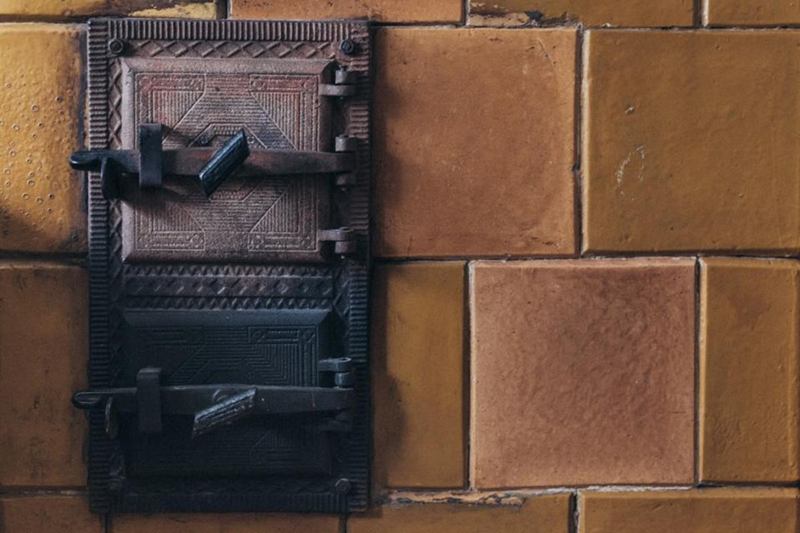
In many Swiss living rooms it is the centrepiece: the tiled stove (Kachelofen) stores heat for hours and releases it gently into the room. Over the heating season, though, dust settles on the warm surfaces, ash piles up in the firebox and soot clouds the glass. To clean a tiled stove you hardly need special products – what you do need is a cold stove, very little water and the right approach for each material.
The five steps apply to classic tiled stoves as well as soapstone stoves. You will also see at a glance which jobs you can do yourself and which belong in the hands of the chimney sweep or the stove builder.
Why you should clean a tiled stove regularly
Dust smoulders on warm surfaces: it gives off an unpleasant smell when you light the fire and leaves grey streaks on the tiles and on the wall above. An overfilled firebox and a sooty glass door also get in the way – air flows less freely and you can barely see the flames.
A tiled stove combines several materials, each needing its own care: glazed tiles, mineral joints, soapstone or plaster, glass, metal and seals. And not everything is your job.
| Part | What to do | Who |
|---|---|---|
| Tiles, soapstone, stove bench | Dust, clean with a damp cloth when needed | You |
| Firebox and ash pan | Remove ash when cold | You |
| Glass door | Remove soot, check the seal | You |
| Warm-air grilles | Vacuum | You |
| Internal flue channels, stovepipe, chimney | Clean and inspect | Chimney sweep or stove builder |
1. Let the stove cool down and get ready
A tiled stove releases its heat over many hours. So wait until the tiles, glass and firebox are completely cold, and ideally plan the job for a day when you are not heating. Cold water on hot tiles or hot glass can cause cracks, and you also risk burns.
- Cover the floor in front of the stove with an old sheet.
- Move the log basket, newspapers and firelighters out of the way.
- Have ready: microfibre cloths, a bucket of lukewarm water, mild soap, a metal shovel and hand brush, a metal ash bucket with a lid and a vacuum cleaner with a brush attachment.
2. Remove ash from the firebox safely
Ash often looks cold, but it can hide embers for a long time. Here is how to handle it:
- With the stove cold, use the metal shovel and brush to transfer the ash into the metal bucket, then close the lid.
- For wood fires, many manufacturers recommend leaving a thin layer of ash in the firebox. Follow the instructions for your stove.
- Put the closed bucket on a non-flammable surface, away from wood and paper.
- Only dispose of the ash once it is completely cold, with your household rubbish as your commune requires.
All the rules on buckets, cooling time and disposal are in our guide on how to dispose of fireplace ashes safely.
3. Wipe glazed tiles with a damp cloth
Glazed stove tiles are tough as long as you treat them gently. Dusting is often enough; only use a damp cloth if you can see marks or streaks.
- Remove dust with a dry microfibre cloth or the vacuum's brush attachment, including on the stove bench.
- Add a few drops of mild soap or washing-up liquid to lukewarm water.
- Dip a soft cloth in it, wring it out very well and wipe the tiles with the barely damp cloth.
- Wipe again with clean water and dry immediately with a dry cloth so no limescale marks are left.
- Wipe the joints with the cloth just slightly damp, without scrubbing or soaking them.
Cream cleaner, steel wool and hard sponges are off limits, as they scratch the glaze. Vinegar and descalers do not belong on the stove either, because acid can attack mineral joints.
4. Look after soapstone properly
Soapstone is a soft natural stone. It stores heat very well but is sensitive to scratches, grease and harsh products.
- Dust it regularly while dry, ideally with a soft cloth.
- If it is dirty, wipe it with a damp cloth and clean water, adding a few drops of mild soap if needed, then wipe with clean water and dry.
- Avoid scouring agents, acids and strong cleaners.
- Only apply oil, wax or care products if the stove manufacturer explicitly recommends them – when the stove heats up, they can smell and stain the stone.
- On some soapstone stoves, light scratches can be sanded out with very fine sandpaper. Only do this if the manufacturer's instructions allow it.
Plastered surfaces should only be dusted dry. For a mark on the plaster, it is best to call in the stove builder.
5. Glass door, door seal and air grilles
Many tiled stoves have a glass door that blackens over time, especially with damp wood or too little combustion air.
- Remove light soot with the ash trick: slightly dampen some newspaper, dip it in fine, cold ash with no charcoal lumps and rub the glass in circles. Test it in a corner first.
- Then wipe with a damp cloth and polish dry.
- For stubborn soot, use a stove glass cleaner as directed – only on the cold glass, never on the seal or frame.
- Check the door seal for cracks, gaps and hardened sections. If the door no longer closes tightly, have the seal replaced by a professional.
- Vacuum warm-air grilles and ventilation slots with the brush attachment.
You will find more methods in our guide on how to clean fireplace glass; for dark marks on the wall, see candle soot on walls.
Common mistakes
- Cleaning a warm stove: temperature differences can damage tiles and glass.
- Too much water: it gets into joints and hairline cracks and leaves marks.
- Scouring agents, steel wool, acids: they scratch glaze and stone or attack the joints.
- Ash in plastic or the vacuum cleaner: leftover embers can start a fire.
- Opening the flue channels yourself: that is a job for the chimney sweep or the stove builder.
Frequently asked questions
What should I use to clean the tiles on a tiled stove?
A soft cloth, lukewarm water and a few drops of mild soap or washing-up liquid. Wring the cloth out well, wipe again with clean water and dry – without scouring agents or acids such as vinegar.
How often should you clean a tiled stove?
During the heating season, dust it ideally every one to two weeks and remove the ash depending on use. A thorough clean of the tiles, glass and door seal is worthwhile before and after the heating season.
Can soapstone be cleaned with water?
Yes, with a damp cloth and clean water, adding a few drops of mild soap if needed, then drying it well. Only use oil, wax or sandpaper if the manufacturer explicitly allows it.
Who cleans the flue channels inside a tiled stove?
The internal flue channels, the stovepipe and the chimney are cleaned and inspected by the chimney sweep or the stove builder. Do not open the inspection hatches yourself unless a professional has shown you how.
Thanks for your feedback! Feel free to share the guide.
Thanks! What was missing? Drop us a line – we will improve the guide. WhatsApp