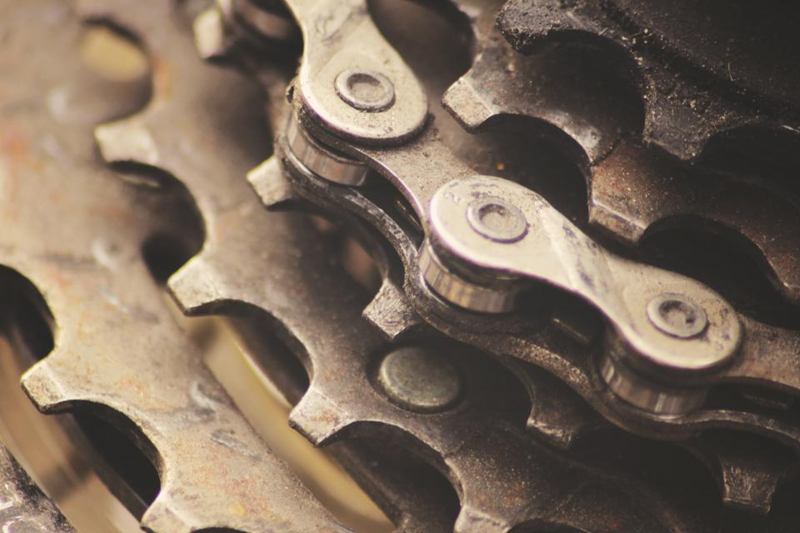
A moment's inattention, and a black streak runs across the bottom of your right trouser leg – the classic mark of a bike chain. Bike grease stains take a little patience, because chain oil is a mix of oil, grease, road dust and fine metal particles. The good news: with the right products, the mark comes out in most cases.
The order matters: first soak up as much oil as possible, then break down the grease, and only then wash. Here are five methods, from first aid to prevention on your commute.
Why bike grease stains are so stubborn
Chain oil and chain grease are designed to stay on the chain even in the rain. That is exactly what makes them so hard to shift from fabric: the oil soaks deep into the fibres and binds dirt and metal particles, which give it its grey to black colour. Water on its own simply runs off.
The longer the mark stays, the harder it gets. Heat from the tumble dryer or an iron can set it permanently. So the rule is: do not dry or iron anything until the mark has gone completely.
| Material | Suitable products | Take care |
|---|---|---|
| Denim, cotton | Cornflour, washing-up liquid, ox gall soap | Hot water only after degreasing |
| Synthetics, sportswear | Washing-up liquid, ox gall soap | Care label, no high temperatures |
| Technical or rain jacket | Mild washing-up liquid, water | No solvents on membranes |
| Wool, silk | Blot carefully | Better taken to a dry cleaner |
| Pannier, shoes | Washing-up liquid, soft brush | Follow the manufacturer's advice |
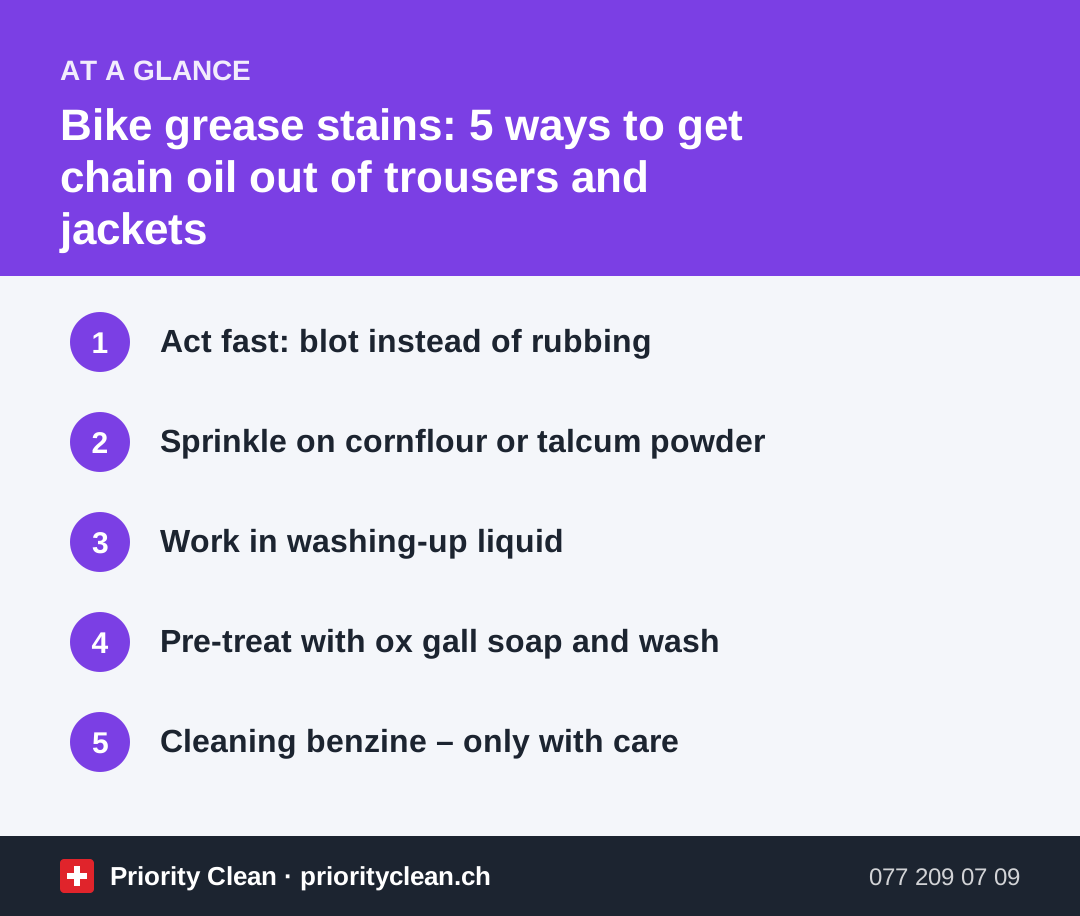
1. Act fast: blot instead of rubbing
While the oil is fresh, some of it still sits on the surface. Put a folded sheet of kitchen paper or a piece of card under the area so nothing soaks through, then blot the mark with a second sheet, working from the outside in. Rubbing spreads the oil and pushes it deeper into the fabric.
On the way, a paper napkin will do. Once you arrive, carry on with the treatment straight away rather than waiting until the evening.
2. Sprinkle on cornflour or talcum powder
Powder soaks up oil like blotting paper. Sprinkle a generous layer of cornflour, talcum powder or a little potato starch on the mark and press it in lightly. After about half an hour – longer is better – brush the powder off. On heavily oiled areas, repeat until hardly any oil comes out.
3. Work in washing-up liquid
Washing-up liquid is made to dissolve grease, in fabric too. Put a few drops directly on the mark and work them in with your fingers or a soft toothbrush, from the outside in. Leave for a few minutes, then rinse with lukewarm water from the back of the fabric.
The Swiss German consumer protection foundation recommends relying on simple household remedies such as curd soap, washing soda or alcohol rather than lots of specialist products. For chain oil, washing-up liquid is just that kind of everyday product almost everyone has to hand. More methods for greasy marks are in How to remove grease stains.
4. Pre-treat with ox gall soap and wash
If a grey shadow remains, it is time for ox gall soap. Dampen the mark and the soap, rub it in well and leave it for half an hour or more. Then wash the garment at the highest temperature the care label allows. The guide Ox gall soap explains how to get the best out of it.
Check the result after washing while the fabric is still wet. If the mark is still visible, repeat steps 3 and 4. Only when nothing is left should the garment go in the tumble dryer or under the iron.
5. Cleaning benzine – only with care
For very old marks, some people reach for cleaning benzine or a solvent-based stain remover. It can work, but these products are highly flammable and irritant. Tox Info Suisse advises reading labels and hazard symbols before use and keeping products in their original packaging.
- Use only small amounts and test on a hidden spot first.
- Work with the window open or outdoors, with no naked flame and no smoking.
- Wear gloves and put a white cloth underneath.
- Let the solvent evaporate completely before washing – never put it straight into the washing machine or tumble dryer.
- Do not use it on jackets with a membrane, acetate or faux leather.
Common mistakes
- Rubbing with a wet cloth: the oil spreads and the mark gets bigger.
- Washing hot first: without pre-treatment the mark can set.
- Tumble dryer or iron too early: heat sets any remains for good.
- Solvents on delicate fabrics: membranes, faux leather and some synthetics can be damaged.
A well-maintained chain leaves far fewer greasy marks on clothes. How to clean and lubricate the chain and drivetrain properly is explained in How to clean a bike after winter.
Frequently asked questions
How do I get chain oil out of trousers?
Blot it first with kitchen paper, then leave cornflour or talcum powder on it and brush off. Next, work in washing-up liquid, pre-treat with ox gall soap and wash according to the care label. Repeat if necessary before the garment dries.
Can old, dried-in bike grease stains still come out?
Often, yes, but it takes several rounds. Leave washing-up liquid or ox gall soap on for longer. Cleaning benzine can help on sturdy fabrics, but it is highly flammable and should be used with care.
Can I treat a rain jacket with cleaning benzine?
No. Solvents can damage membranes and coatings. Use a mild washing-up liquid and water and follow the care label. If in doubt, take it to a dry cleaner.
How do I get chain oil off my hands?
With soap and warm water, rubbing well, perhaps with a nail brush. Solvents such as benzine should not be used on skin.
Thanks for your feedback! Feel free to share the guide.
Thanks! What was missing? Drop us a line – we will improve the guide. WhatsApp