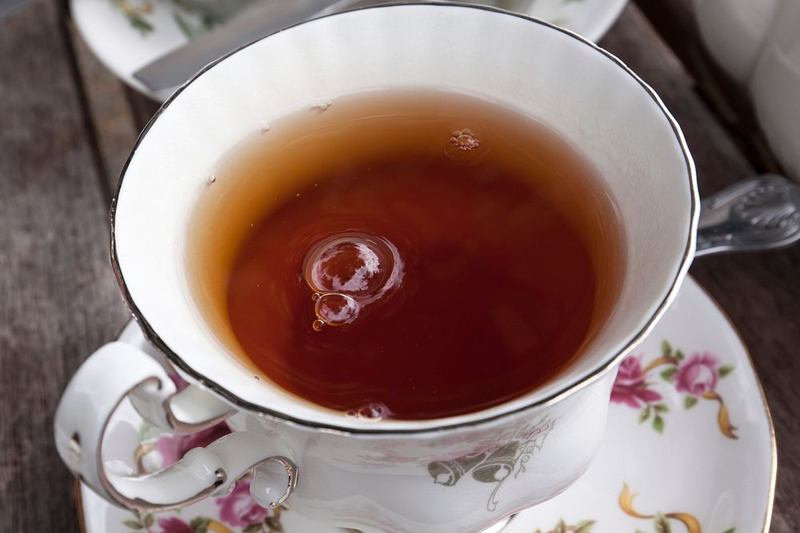
Your favourite mug has a brown ring inside, your pale blouse has a splash of black tea on it, and the linen tablecloth shows the outline of the teapot. Tea stains can usually be removed – as long as you know what causes them and use the right product. Hot water and hard rubbing often make things worse.
Tea colours mainly through its tannins. Here are five methods to dissolve these deposits from crockery and wash the marks out of fabric, using simple household remedies that most Swiss households already have in the cupboard.
Why tea stains are so stubborn
Black tea, green tea and rooibos contain tannins and pigments. Tannins bond easily with surfaces – with the glaze of a mug just as with cotton or linen fibres. The longer the mark sits and the hotter it is, the more firmly it sets. Herbal and fruit teas can also colour depending on the type, hibiscus with its strong red being one example.
In mugs, limescale often plays a part too: hard water leaves a rough layer on which tea colour sticks particularly well. With milky tea, the mark also contains fat and protein – so start with cold water to stop the protein from setting.
| Where | Typical look | First choice |
|---|---|---|
| Porcelain or ceramic mug | Brown ring at the tea line | Bicarbonate of soda, cleaning tablet |
| Glass, flask | Brownish film | Bicarbonate of soda, cleaning tablet |
| Cotton, linen (white) | Yellowish-brown mark | Cold rinse, ox gall soap, lemon juice |
| Coloured clothes | Dark ring | Cold rinse, ox gall soap, test on a hidden spot |
| Wool, silk | Brown mark | Dab with cold water, delicates detergent, dry cleaner if needed |
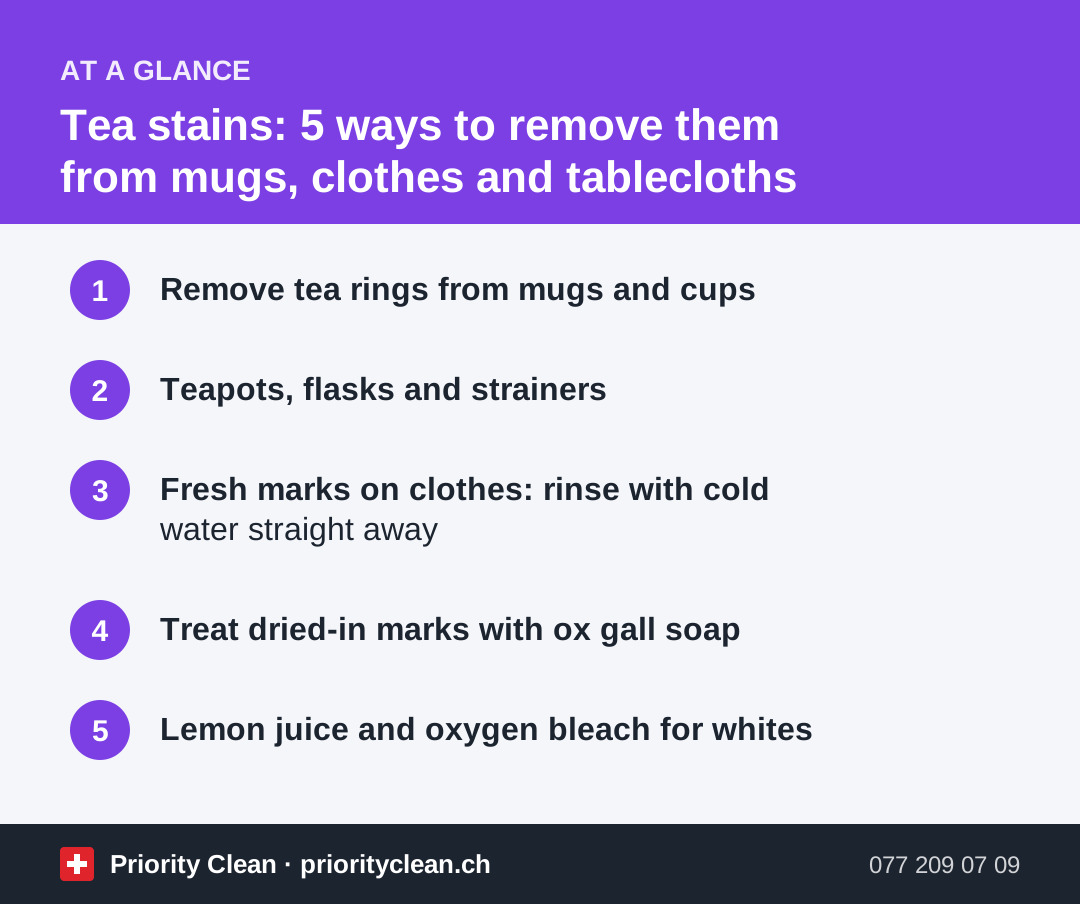
1. Remove tea rings from mugs and cups
For crockery, bicarbonate of soda is the go-to product. The Swiss German consumer protection foundation lists it alongside washing soda, vinegar, citric acid and curd soap among the simple household remedies that can replace many specialist products.
- Put a teaspoon of bicarbonate of soda into the damp mug and mix to a paste with a little water.
- Rub the ring gently with a soft sponge.
- For stubborn rings, fill the mug with hot water and a tablespoon of bicarbonate of soda and leave it for a few hours.
- Rinse thoroughly and wash up as usual.
Alternatively, effervescent cleaning tablets sold for dentures dissolve tea deposits without scrubbing. Drop one into the mug filled with warm water, let it work, then rinse well. Like all cleaning products, keep them in their original packaging and out of children's reach, as Tox Info Suisse advises.
2. Teapots, flasks and strainers
In teapots, limescale and tea deposits often go together. The rule: first dissolve the limescale with an acid, then remove the tannin deposits with bicarbonate of soda – one after the other, never mixed. The guide Descale a teapot and remove tea stains explains how this works for glass, porcelain and cast iron. For flasks with a narrow neck, cleaning tablets and a long bottle brush work well too.
3. Fresh marks on clothes: rinse with cold water straight away
The faster you act, the better. For fresh marks, water is often enough:
- Blot excess tea with a clean, light-coloured cloth – do not rub.
- Rinse the mark under cold running water from the back of the fabric, so the colour is pushed out rather than in.
- Do not use hot water: it can set the tannins and, with milky tea, make the protein set too.
- When you are out, a glass of water and a napkin will do – the main thing is not to let the mark dry.
4. Treat dried-in marks with ox gall soap
If the mark has already dried, soak it in cold water first. Then rub it with dampened ox gall soap, leave it for about half an hour and wash according to the care label. The guide Ox gall soap explains how to use it properly.
For cotton or linen tablecloths, a longer soak in cold water with a little detergent is worthwhile before they go in the machine. Check after washing that the mark has gone completely – the tumble dryer can set any remains for good. If a shadow is still visible, repeat the treatment before drying.
5. Lemon juice and oxygen bleach for whites
If a yellowish shadow remains on white cotton or linen, lemon juice can help: dab it on, leave briefly, rinse thoroughly and then wash as normal. On coloured fabric, silk and wool, lemon juice is off limits because the acid can lighten colours or damage fibres. If in doubt, test on a hidden spot.
For white laundry that can be washed hot, oxygen bleach is another option – dose it strictly according to the pack instructions.
Common mistakes with tea stains
- Rinsing with hot water: it can set the mark instead of loosening it.
- Rubbing hard: the colour is pushed deeper into the fabric and the fibres roughen.
- Using scouring powder in the mug: scratches in the glaze make new rings form even faster.
- Lemon juice on colours: it leaves pale patches that cannot be fixed.
- Straight into the tumble dryer: heat sets any remains permanently.
Stains from other drinks behave in a similar way. For coffee, see How to remove coffee stains.
Frequently asked questions
How do I get brown tea rings out of a mug?
With bicarbonate of soda: rub in a paste of bicarbonate and a little water with a soft sponge, or leave the mug to soak for a few hours with hot water and a tablespoon of bicarbonate. Effervescent cleaning tablets also dissolve tea deposits.
Do tea stains come out of clothes?
Fresh ones usually do if you rinse them immediately with cold water from the back. Dried marks should be pre-treated with ox gall soap and washed according to the care label. For delicate fabrics such as silk or wool, a dry cleaner is often the safer choice.
Does lemon juice help with tea marks?
On white cotton and linen, lemon juice can lighten a yellowish shadow. Do not use it on coloured fabrics, silk or wool. Never mix lemon juice with chlorine bleach.
Why shouldn't I wash tea marks out with hot water?
Hot water can set the tannins in the fabric. With milky tea, the protein also sets. So for fresh marks: rinse with cold water first, then pre-treat and wash.
Thanks for your feedback! Feel free to share the guide.
Thanks! What was missing? Drop us a line – we will improve the guide. WhatsApp