Tiny reddish-brown beetles are crawling on the kitchen window, and the next day there are a few more. Biscuit beetles – also called bread beetles or, in the US, drugstore beetles – are among the most common stored-food pests in Swiss households. The beetles on the window are only the tip of the iceberg: their larvae usually sit somewhere in the food cupboard, eating their way through flour, pasta or spices.
Insect spray won't help here. What matters is a thorough search for the source, rigorous sorting and a clean kitchen. Five steps show how.
Where biscuit beetles come from and how to recognise them
The City of Zurich fact sheet describes the bread or biscuit beetle as a common stored-product pest: the 2–3 mm reddish-brown beetles at the window are usually the first sign. Their larvae live in bread, pasta, flour, spices, dried herbs, nuts, chocolate and pet food – even in gingerbread or dried-flower decorations. They bite through paper, cardboard and thin film.
The insects often arrive with a product you have bought, or they find their way into food that has been stored open for a long time. It has nothing to do with poor cleanliness.
| Sign | What it means |
|---|---|
| Small reddish-brown beetles on the window | Adult beetles head for the light |
| Tiny round holes in packets | Larvae or beetles have bitten through |
| Flour or spices look lumpy or dusty | Feeding damage and larvae in the product |
| Beetles in pet food or decorations | The source is outside the kitchen |
Mealworm beetles are much larger and dark brown to black; their larvae are the familiar mealworms. The approach is the same. Similar beetles with hairy larvae in living areas are more likely to be carpet or larder beetles – see our guide on carpet beetles and larder beetles.
1. Find the source
Empty the food cupboard completely and check every packet in good light. Tip flour, semolina and spices onto a pale plate: beetles, larvae and feeding dust are easy to see.
Remember places outside the kitchen too:
- Food for dogs, cats, birds or rodents
- Dried flowers, arrangements and potpourri
- Gingerbread, biscuits and nuts left over from Christmas
- Rarely used baking ingredients and tea at the back of the cupboard
- Emergency supplies in the cellar, such as pasta, rice or rusks
Note where you find the most insects. That is usually where the source is, and where the most thorough cleaning will be needed later.
2. Throw away infested food without hesitation
Anything in which you find beetles, larvae or holes goes, packaging and all, into a tightly sealed rubbish bag and straight out of the flat. Be generous: the larvae are tiny, and one overlooked packet is enough to start a new infestation.
Food that was stored nearby and looks fine can be treated instead of thrown away:
| Method | How to do it |
|---|---|
| Cold | In the freezer at −18 °C for a few days |
| Heat | In the oven at 60 °C for more than an hour |
The City of Zurich names both methods for infested food. Heat is suitable for dry products such as pasta or nuts, not for chocolate. Anything visibly infested still goes in the bin.
3. Vacuum up the biscuit beetles and clean the cupboard thoroughly
Now clean the empty cupboard:
- Vacuum: use the crevice nozzle to vacuum shelves, corners, shelf supports, hinges and gaps thoroughly. The City of Zurich advises you to vacuum up stray beetles and dispose of the vacuum bag.
- Wipe: clean shelves and walls with hot water and soap or washing-up liquid. The Federal Food Safety and Veterinary Office (FSVO) also recommends hot water and soap for worktops and utensils so that germs don't spread – more on food hygiene.
- Let it dry: leave the doors open until everything is completely dry.
- Include the surroundings: vacuum the window frame and sill, where the beetles gather.
4. Store food properly
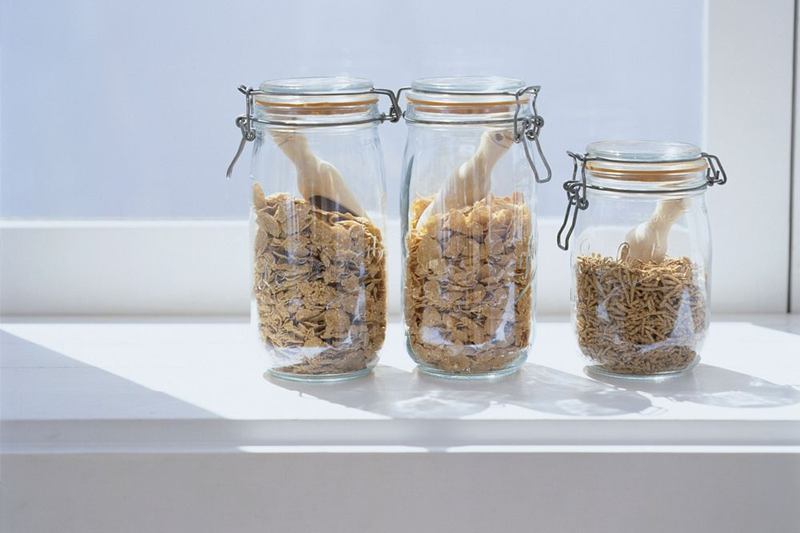
To stop the infestation coming back, decant flour, pasta, rice, spices, nuts and pet food into tightly closing jars or tins with rubber seals as soon as you buy them. Paper and cardboard won't stop the larvae.
- Only buy as much as you will use in the foreseeable future.
- Put older supplies at the front and use them first.
- Wash and dry jars well before refilling them.
- Store pet food in closed containers as well.
5. Keep checking for a few weeks
Even after thorough cleaning, the odd beetle that was still developing may appear. Check the window and cupboard regularly for a few weeks and vacuum up beetles straight away. If new ones keep turning up, there is probably a source you have missed – or it is time to call in a pest control specialist.
The most common mistakes
- Only tackling the beetles on the window: the source in your food remains.
- Spraying insecticide in the food cupboard: poison has no place near food and doesn't reach the larvae inside the packets.
- Closing open packets with a clip: the larvae bite through anyway.
- Leaving the vacuum bag in the flat: insects can keep developing inside it.
Frequently asked questions
Are biscuit beetles dangerous?
They don't sting or bite people and are not considered disease carriers. Infested food is contaminated, though, and belongs in the bin.
Where do biscuit beetles in the flat come from?
Usually from an infested product bought in a shop, or from food that has been stored open for a long time. Pet food and dried-flower decorations can also be the source.
How long does it take to get rid of biscuit beetles?
After sorting and cleaning, individual beetles often keep appearing for a few weeks. Vacuum them up and check regularly. If they don't become fewer, there is still a source.
Can I still use flour with biscuit beetles in it?
No. Throw away visibly infested flour with its packaging. Only unaffected supplies stored nearby can be frozen or heated as a precaution.
Thanks for your feedback! Feel free to share the guide.
Thanks! What was missing? Drop us a line – we will improve the guide. WhatsApp