A shadow darts across the patio at dusk, fresh holes appear by the compost, and dark droppings turn up in the bike room. Rats in the garden are unpleasant, but no reason to panic. They almost always come for the same reason: they find food, water and a sheltered hiding place.
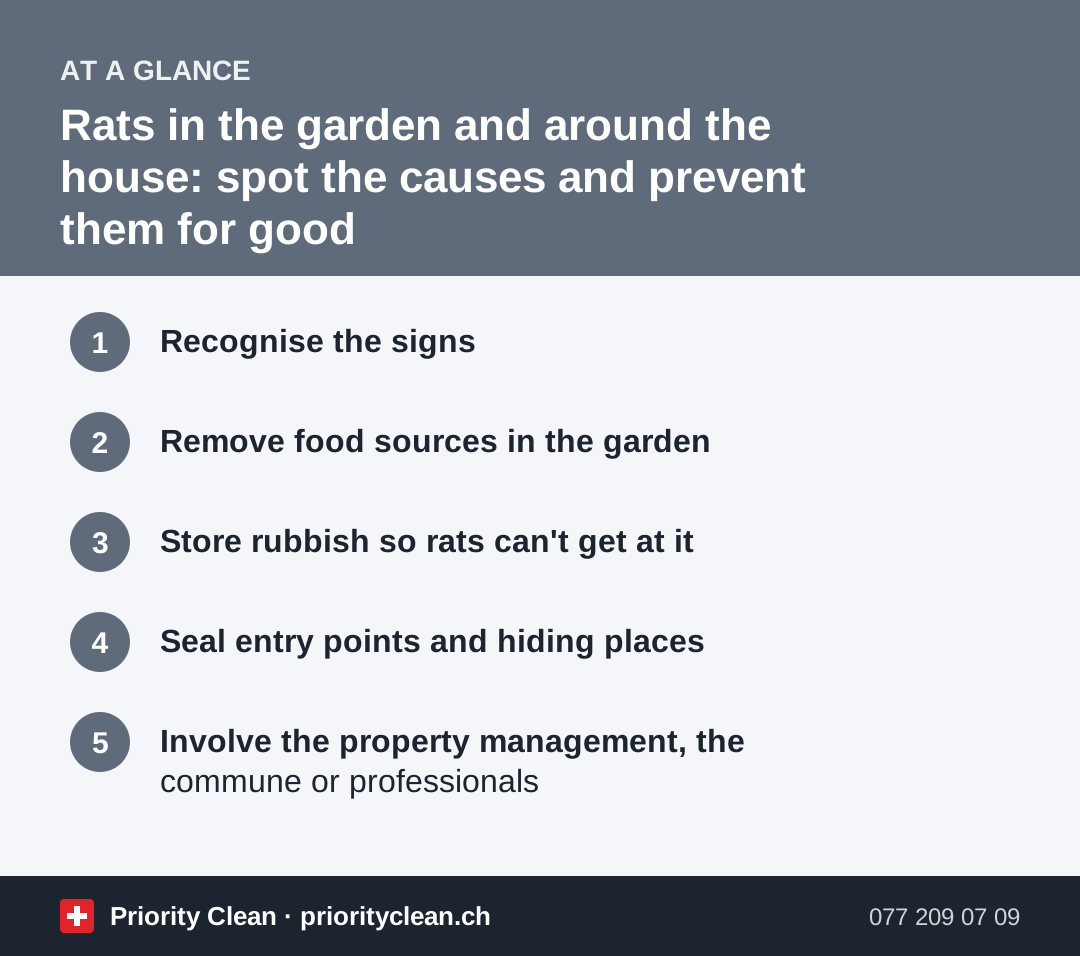
The good news: that is exactly where you can act. Five steps help you identify the causes, make your property unattractive and know when to call in the property management, the commune or a professional.
Why rats come into the garden
In Swiss towns and villages, the rat you are most likely to meet is the brown rat. It often lives in the sewers, under embankments or in burrows and is mainly active at night. Rats are adaptable and cautious: they remember reliable food sources and use the same routes again and again.
The Swiss Federal Office for the Environment (FOEN) points out that rats and mice can transmit diseases and contaminate rooms and food with droppings and urine. So it pays to act early, before a population becomes established.
1. Recognise the signs
You rarely see rats themselves. Far more often, they give themselves away through the traces they leave:
| Sign | How to recognise it |
|---|---|
| Droppings | Dark, elongated droppings, clearly larger than mouse droppings, often along walls |
| Runs | Worn paths in the lawn, dark grease marks on edges and walls |
| Holes | Holes in the ground under paving slabs, shrubs, steps or by the compost |
| Gnaw marks | Gnawed plastic containers, sacks, wood or cables |
| Noises and smell | Scratching and rustling at night, a sharp, ammonia-like smell |
If you see rats during the day as well, you are often dealing with a larger population. For what helps against mice in the house, see our guide Mice in the cellar.
2. Remove food sources in the garden
The most effective step is to clear the table:
- Compost: use a closed compost bin with fine wire mesh at the bottom. Cooked leftovers, meat, fish, dairy products and bread don't belong on an open compost heap.
- Bird seed: choose feeders from which nothing falls to the ground and pick up leftovers every day. If you have rats, stop feeding.
- Pet food: don't leave cat or dog bowls outside overnight, and store chicken and rabbit feed in tightly closing containers.
- Windfalls and berries: pick them up regularly.
- Water: cover open water butts and containers.
Wild animals shouldn't be fed either. The Canton of Basel-Stadt notes that feeding pigeons attracts not only more pigeons but also rats (page in German).
3. Store rubbish so rats can't get at it
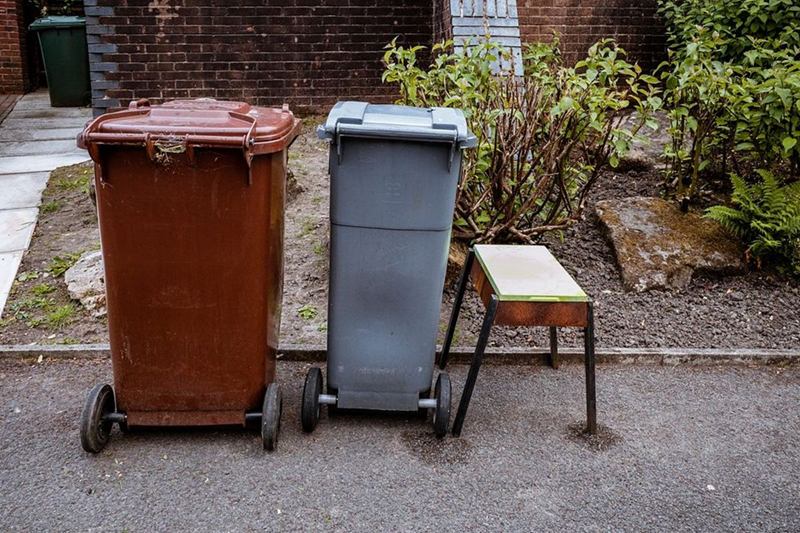
Rubbish is one of the most important food sources for rats. The FOEN recommends collecting food waste in closed containers and emptying them regularly, putting rubbish bags out only on the morning of collection, and cleaning bins regularly.
- Don't keep rubbish bags on the balcony, in the garden or in front of the house for days.
- Use bins and green-waste containers with tight-fitting lids, and always close them.
- Pick up spilt scraps around the bin area straight away.
To keep bins clean and low-odour, read our guide on how to clean a wheelie bin; for the kitchen bin, see Bin smells in summer.
4. Seal entry points and hiding places
Rats are skilled climbers and good swimmers, and they squeeze through surprisingly small openings. Check the outside of the house:
- Have gaps in the façade, around pipe entries and under doors sealed.
- Protect cellar windows and ventilation openings with sturdy mesh – the FOEN recommends a mesh size of 0.5 cm.
- Keep the doors to the cellar, bike room and garage closed.
- Avoid log piles, clutter and dense undergrowth right against the house wall, as they provide cover.
In a rented property, report gaps and damage to the property management or caretaker rather than making structural changes yourself.
5. Involve the property management, the commune or professionals
According to the FOEN, individual animals can be caught with snap traps. Only handle dead animals with gloves and dispose of them with household waste. For a larger infestation, or if rats get into the house, a professional pest controller is the right contact.
Tenants should inform the property management straight away. Many towns and communes also have a contact point for pests; for rats on public land or coming from the sewers, contact your commune.
Cleaning up rat droppings and traces safely
Where rats have been, droppings and urine are left behind. Don't stir up any dust:
- Wear disposable gloves and, in enclosed spaces such as the cellar or garden shed, an FFP2 mask as well.
- Air the room well beforehand.
- Spray droppings and dirt with water and household cleaner and leave it briefly – never sweep dry or vacuum.
- Pick everything up with kitchen roll or disposable cloths, put it in a plastic bag, seal it and dispose of it with household waste.
- Wipe the surfaces with a damp cloth, then throw away the gloves and wash your hands thoroughly.
Our guide on how to clean mouse droppings safely describes the procedure in detail. Throw away any gnawed food.
The most common mistakes
- Waiting: rats breed quickly, and a small population soon grows.
- Laying poison yourself: this endangers children, pets and wildlife.
- Sweeping or vacuuming droppings dry: it stirs up contaminated dust.
- Only tackling the animals: as long as food and hiding places remain, new rats will follow.
Frequently asked questions
What attracts rats to the garden?
Above all, food: open compost with leftovers, bird seed on the ground, pet bowls, windfalls and badly closed rubbish. Add to that hiding places such as log piles, clutter and dense undergrowth.
Are rats dangerous?
Rats can transmit pathogens and contaminate rooms and food with droppings and urine. So never touch the animals or what they leave behind with bare hands. If you have health concerns, contact your GP.
Who do I call about rats around the house?
Tenants should first inform the property management or caretaker. For a larger infestation, a professional pest controller can help. For rats on public land or coming from the sewers, your commune is the right contact.
Can I put down rat poison myself?
It is not advisable. Poison baits endanger children, pets and wildlife. Leave them to professionals, who place them in secure stations, and focus on prevention yourself.
Thanks for your feedback! Feel free to share the guide.
Thanks! What was missing? Drop us a line – we will improve the guide. WhatsApp