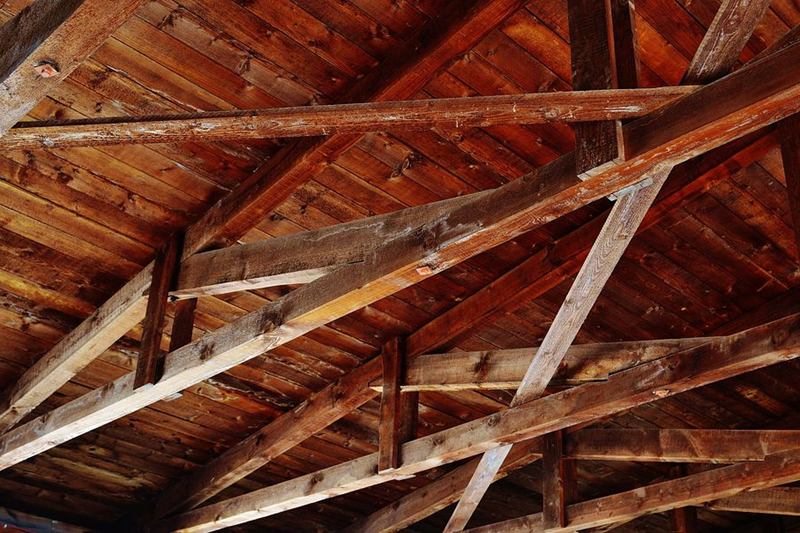
At night something thumps above the ceiling, there are droppings and feathers in the attic, and a strong smell comes from under the roof. A marten in the loft is nothing unusual in Switzerland: the stone marten has adapted well to towns and villages and likes to use attics and cavities under the roof as a shelter.
The animal itself is a matter for specialists and property owners. What you can do is look for the signs, inform the right people and clean up thoroughly and safely. Five steps guide you through it.
How to recognise a marten in the loft
Stone martens are active at night. The City of Zurich describes roofs and attics as ideal hiding places and lists the typical consequences: droppings, food remains and torn-out insulation cause smell, costly roof damage and noise – especially in spring, when the young are raised. The Ticino hunting and fishing office adds that martens make holes in roof insulation, leave droppings, make noise at night in attics and gnaw rubber and plastic parts of cars.
| Sign | What it means |
|---|---|
| Thumping, scratching, squeaking at night | An active marten, often with young in spring |
| Small piles of droppings in the same spots | Martens use fixed latrine sites |
| Feathers, eggshells, bones | Prey remains carried back to the shelter |
| Torn insulation, shreds of membrane | Nesting and resting places under the roof |
| Pungent, sweetish smell | Droppings, urine and rotting prey remains |
Noises but no visible signs? It may be another animal, such as mice. See our guide on cleaning up mouse droppings.
1. Don't trap it yourself – call the game warden and property management
Martens are wild animals. According to the City of Zurich, private individuals may neither trap nor kill them, and hunting law provides for a closed season from 16 February to 31 August. The first point of contact is the cantonal or municipal game warden.
If you rent, report the signs in writing to the property management or caretaker. The roof is part of the building – measures on the roof and insulation are usually the owner's responsibility. Note dates and noises, and photograph the signs.
2. Find the entry points and have them sealed
The Canton of Fribourg describes a simple test: stuff crumpled newspaper into suspicious openings – a marten will push it out. Roof openings larger than 5 cm are closed with wire mesh, preferably in autumn. Branches touching the roof are cut back, and a climbing barrier can be fitted to the gutter or downpipe at around 2.5 m.
Work on the roof belongs in the hands of a roofer or a specialist. Timing matters: sealing in spring or summer can trap young animals inside. According to the City of Zurich, noise or smell deterrents usually only work for a few days.
3. Remove droppings and prey remains safely
Once the marten has definitely gone and the entry points are sealed, you can start cleaning. Droppings and prey remains can contain germs, so take care:
- Protect yourself: disposable gloves, a well-fitting respirator mask (for example FFP2) and long-sleeved clothes that you wash afterwards.
- Dampen instead of stirring up dust: lightly spray droppings and nesting material with water and a little washing-up liquid. Don't sweep, don't wipe dry and don't use a normal vacuum cleaner.
- Pick up: use kitchen roll or a dustpan, put everything in a sealed rubbish bag, tie it and dispose of it with household waste.
- Wipe down: mop the floor with warm water and a cleaner, then wash cloths hot or throw them away.
- Wash your hands: after taking off the gloves, wash your hands thoroughly with soap.
4. Have the insulation checked
Soiled, soaked or torn insulation can't be cleaned. A specialist removes and replaces it so that the smell and heat loss disappear. Mineral wool irritates skin and airways – handle it only with gloves, a mask and long clothing.
5. Remove the smell and restore good hygiene
Once the source is gone, the smell usually fades within days. Air the attic thoroughly and wipe floors and surfaces damp. The Federal Office of Public Health (FOPH) stresses that good home hygiene matters more than strong cleaning products – and disinfecting cleaners are not needed in an average household. Air fresheners only mask the smell and pollute the indoor air.
If a smell lingers, there is often still soiled insulation or a forgotten latrine site under the roof. More tips in our guide on getting rid of smells in the flat.
The most common mistakes
- Trapping the marten yourself: this is forbidden for private individuals and endangers the young.
- Blocking holes in spring: young animals trapped inside die under the roof and make the smell worse.
- Sweeping droppings dry: dust with germs and fibres gets into your airways.
- Leaving cat food and rubbish bags outside: this keeps attracting martens.
Frequently asked questions
Is a marten in the loft dangerous?
For people the stone marten is generally not a direct danger – it avoids encounters. The problems are noise, smell, damage to the roof and insulation, and droppings, which you should only remove with gloves and a mask.
Can I drive away or trap a marten myself?
Trapping and killing martens is not allowed for private individuals. Contact the game warden or a specialist. Tenants should also inform property management.
Who pays for marten damage in a rented building?
That depends on the case and the lease. Work on the roof is usually the owner's responsibility. Clarify costs with property management and your insurer; if in doubt, a tenants' association can advise you. This is not legal advice.
What helps against marten smell in the attic?
First remove the source: droppings, prey remains and soiled insulation. Then air the space and clean with a damp cloth. Air fresheners only mask the smell and pollute the air.
Thanks for your feedback! Feel free to share the guide.
Thanks! What was missing? Drop us a line – we will improve the guide. WhatsApp