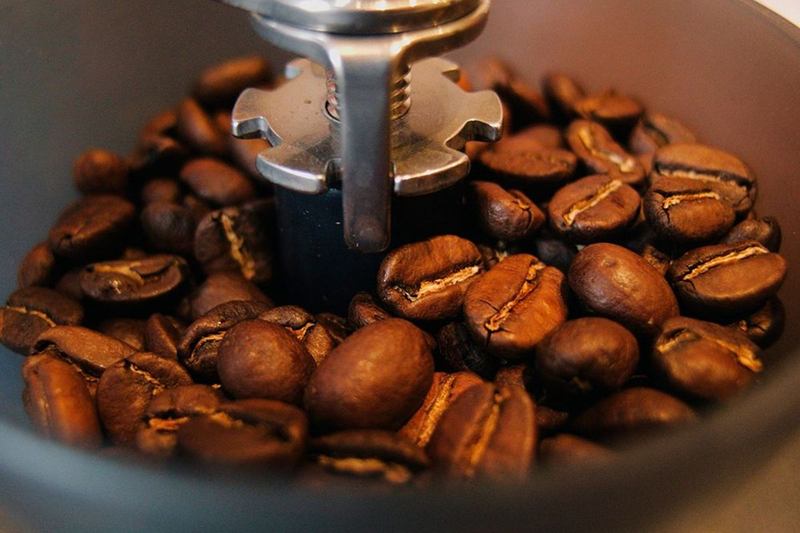
Freshly ground coffee tastes best – as long as the machine is clean. Every time you grind, fine powder and a thin film of coffee oil stay behind in the burrs. After a few weeks this oil turns rancid and gives your espresso a bitter, stale note. To clean a coffee grinder, you rarely need water; what you need most is a brush, a vacuum cleaner and a little patience.
Whether it is an electric model with conical or flat burrs, a simple blade mill or a hand mill passed down from your grandmother, these five steps show how to remove residue and oil without damaging the burrs.
Why you should clean a coffee grinder regularly
Coffee beans contain oils that rise to the surface during roasting – far more in dark roasts than in light ones. As the beans are ground, this oil settles on the burrs, the chute and the bean hopper. Together with fine coffee powder it forms a sticky layer that turns rancid over time.
On top of that come stale leftovers: in almost every machine a little powder stays in the burrs and chute after use. Next time, this stale powder ends up in your cup. If a lot builds up, the powder clumps, the particle size becomes uneven and the motor has to work harder.
| Sign | Likely cause |
|---|---|
| Coffee tastes bitter or rancid | Old oils and stale powder in the burrs |
| Powder clumps, chute blocked | Oil film and moisture, often with dark roasts |
| Uneven particle size | Deposits between the burrs |
| Machine louder or slower | Heavy soiling, possibly a jammed bean |
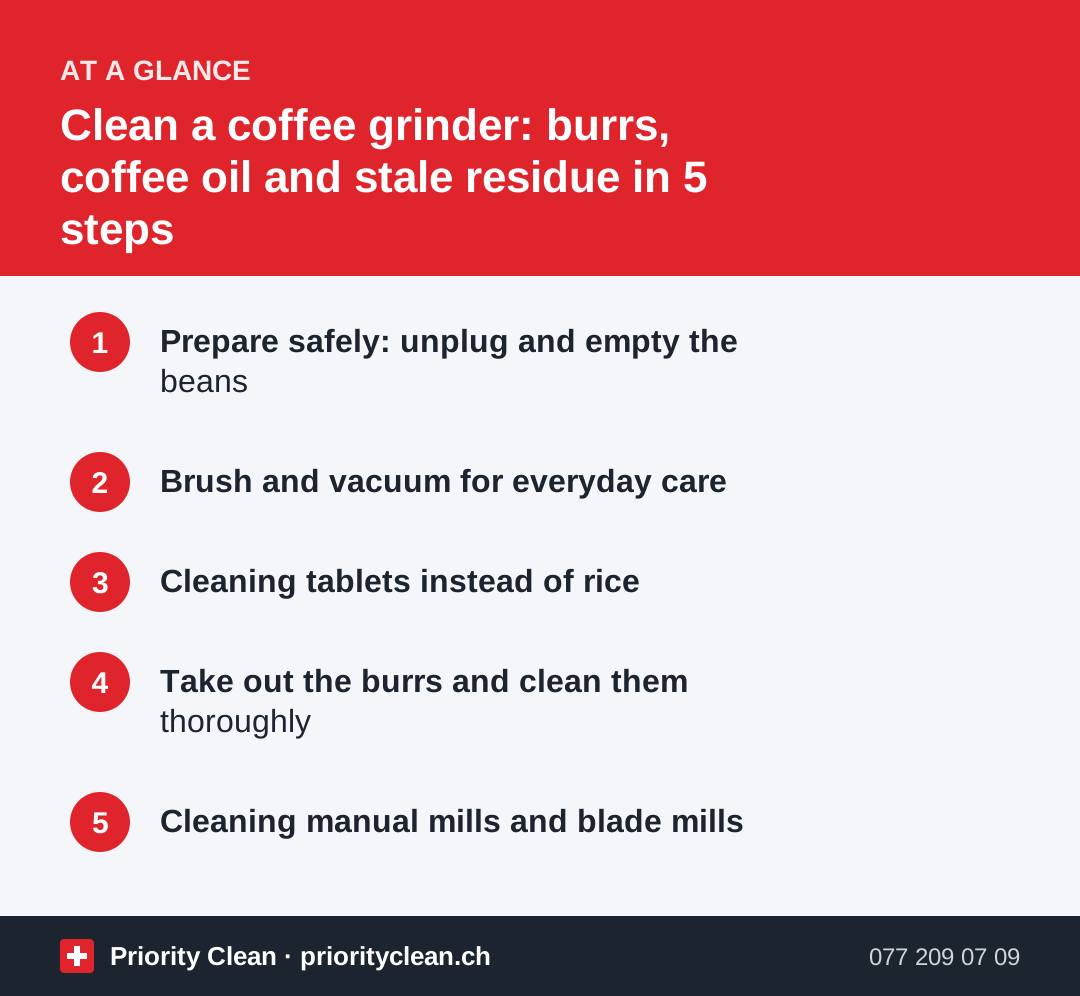
1. Prepare safely: unplug and empty the beans
Unplug an electric model before every clean. Swiss fire prevention advice is in any case to unplug electrical appliances after use – with this machine it also protects your fingers. The blades of a blade mill are sharp, so only hold them by the edge.
Then empty the bean hopper. Many models have a slide that stops beans from feeding through. Let the last beans run through before unplugging, or shake them out. Put a cloth underneath, as cleaning releases fine powder.
2. Brush and vacuum for everyday care
Regular care needs neither water nor cleaning products:
- Remove the bean hopper and wipe it with a dry or slightly damp cloth. Oily film comes off with warm water and a little washing-up liquid – then let it dry completely.
- Brush out the chute with a small brush. An old pastry brush or a dedicated cleaning brush works well.
- Vacuum up loose residue with the crevice nozzle, after a pass with a fine brush if needed.
- Empty the powder container and wash it in warm water with washing-up liquid, if it is removable.
- Wipe the outside with a damp cloth – never hold it under the tap.
How often depends on how much coffee you drink. With daily use, a quick brush-out every week is worthwhile.
3. Cleaning tablets instead of rice
A tip doing the rounds online is to run uncooked rice through the machine. With simple blade mills this can work. With conical or flat burrs many manufacturers advise against it: rice is harder than roasted beans, strains the motor and burrs and leaves starch that makes everything even stickier. So check the manual before using rice.
The safer alternative is cleaning tablets or granules made for coffee grinders. They are usually made from food-safe raw materials, run through the burrs like beans and absorb oil and residue as they go. The dose and frequency are on the packet. Afterwards, run a little coffee through and discard it.
4. Take out the burrs and clean them thoroughly
A few times a year – more often with dark or flavoured beans – a thorough clean pays off. On many models the upper burr or cone twists out without tools, but only do this if the manual provides for it.
- Remove the hopper and note or photograph the setting.
- Release and lift out the upper burr or cone as described in the manual.
- Brush and vacuum both burrs, the housing and the chute.
- Rub off stubborn oil film with a dry microfibre cloth or a toothbrush. Do not wash steel burrs with water.
- Reassemble everything and turn the setting back to the one you noted.
5. Cleaning manual mills and blade mills
Manual mills can usually be taken apart completely. Brush out the handle, axle and burrs while dry. Ceramic burrs tolerate water better than steel, but all parts must be completely dry before reassembly, otherwise the next batch of powder clumps. Wooden bodies should only be wiped dry.
Blade mills often have a removable lid and a fixed bowl. Unplug, tap out the powder, wipe the bowl with a brush and a slightly damp cloth and let it dry well. Never submerge the motor base. If you also use the same mill for spices, clean it every time you switch, or your coffee will taste of cardamom or pepper.
If the burrs are built into a bean-to-cup machine, different rules apply – see our guide to cleaning a bean-to-cup coffee machine. For limescale inside the machine, read descaling a coffee machine.
The most common mistakes
- Water on the burrs: steel rusts and damp powder sticks everywhere.
- Rice in a burr machine: it can overload the motor and damage the burrs.
- Working on it while plugged in: one accidental press of the button is enough to cause an injury.
- Refitting a wet hopper: leftover moisture makes beans and powder clump.
- Forgetting the setting: after reassembly the fineness is often no longer right.
By the way, what the Federal Food Safety and Veterinary Office recommends for the kitchen also applies to coffee accessories: clean worktops and utensils with hot water and soap. Wash hoppers, portafilters and spoons regularly – the burrs themselves stay dry.
Frequently asked questions
How often should you clean a coffee grinder?
It depends on use. If you drink coffee every day, a quick brush-out every week is worthwhile, with a thorough clean with the burrs removed a few times a year. Dark and flavoured beans leave more oil and need more frequent care.
Can I clean my coffee grinder with rice?
With simple blade mills, yes. With conical or flat burrs, many manufacturers advise against it because rice is hard and leaves starch residue. Check the manual and, if in doubt, use cleaning tablets.
Can the burrs be washed with water?
Not steel burrs, as they can rust. Ceramic burrs in manual mills tolerate water better but must dry completely before reassembly. Burrs in electric models should always be cleaned dry.
Why does my coffee taste bitter even with fresh beans?
Rancid oils and stale powder in the burrs are often to blame. Clean the machine thoroughly and discard the first batch. If the taste persists, check the fineness, the water temperature and whether the coffee machine needs descaling.
Thanks for your feedback! Feel free to share the guide.
Thanks! What was missing? Drop us a line – we will improve the guide. WhatsApp