In the morning the bedroom air feels heavy; in the afternoon your focus fades while working from home. Often it is not the weather but stale air. If you measure CO2 levels at home, you see in black and white when it is time to open the windows, instead of relying on how the room feels.
In spring, when the heating is still on and windows often stay shut, it is worth a closer look. These five steps show how to use a monitor sensibly, read its display correctly and refresh the air in a few minutes.
Why CO2 levels at home rise
Carbon dioxide (CO2) is a colourless, odourless gas that we breathe out with every breath. In a closed room it therefore builds up little by little. How fast depends on the number of people, the size of the room and how tightly the windows and doors seal. Modern, well-insulated flats keep the warmth in – but also the stale air.
The CO2 level is above all a good indicator of how much fresh air a room gets. When it rises, moisture from breathing, cooking and showering and odours usually accumulate as well. Candles, a gas hob or an open fireplace also consume oxygen and give off combustion gases.
| Situation | Why the air goes stale quickly | What helps |
|---|---|---|
| Bedroom, door closed | Two people breathing for hours in a small room | Air thoroughly before bed and after getting up |
| Home office | Long hours sitting with the window closed | Air briefly during every break |
| Dinner with guests | Many people, cooking, candles | Cross-ventilate every now and then |
| Children's room | Small room, door often shut at night | Air morning and evening, door open during the day |
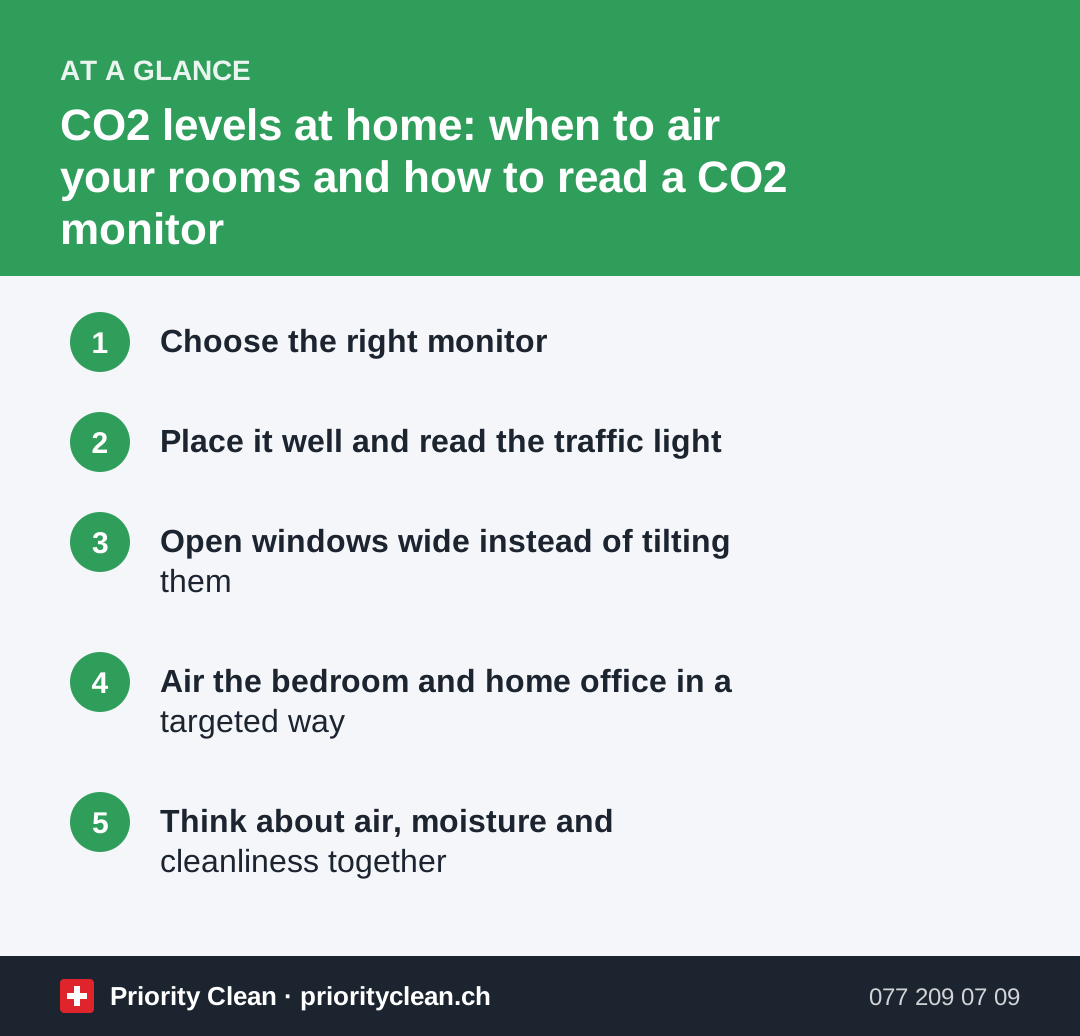
1. Choose the right monitor
Not every device that shows "air quality" actually measures CO2. Some cheap models only estimate it from other gases. Check the product description for a genuine CO2 sensor – it is often labelled as an NDIR sensor.
Devices that also show temperature and humidity are practical. In everyday life, a traffic light or an audible signal is more useful than a long row of figures. If you want to compare levels over several days, choose a model with a history view.
2. Place it well and read the traffic light
Where the device stands has a big influence on the reading:
- At breathing height in the room, for example on a shelf or desk – not right by the window and not next to the radiator.
- Not right under your nose: next to the keyboard it mainly measures your own breath.
- In the bedroom on the chest of drawers rather than on the bedside table right by the pillow.
- Give it time: after switching it on or moving it, the device needs a while before the readings settle. The manual says whether and how it needs calibrating.
Most devices show a traffic light: green for good air, amber for "air soon", red for "air now". The manufacturer decides at which level the colour changes – rely on its information rather than rules of thumb from the internet. The trend says more than a single figure anyway: if the curve climbs steeply, it is time for fresh air.
3. Open windows wide instead of tilting them
When the air is stale, only an exchange with outdoor air helps. The Federal Office of Public Health advises opening windows fully, cross-ventilating where possible and airing for at least five minutes during the heating season. SwissEnergy recommends airing three times a day for five to ten minutes with windows wide open or a through draught, instead of leaving them tilted.
A window left permanently tilted exchanges the air only slowly but chills the walls and window reveal – that costs heating energy and encourages condensation. With a CO2 monitor you can see directly how quickly the level falls when you open the windows wide. In summer, air early in the morning or late in the evening, when it is cooler outside. More on this in our guide to airing in winter.
4. Air the bedroom and home office in a targeted way
Bedroom: air thoroughly before going to bed and again right after getting up. If the bedroom door stays open, the air spreads over a larger volume. If you sleep with the window tilted, make sure the reveal does not get cold and damp.
Home office: for workplaces, Swiss labour law requires rooms to be adequately ventilated. In its commentary, SECO also gives air temperatures of about 21–23 °C in winter for seated office work. Formally these rules apply to employers, but they are a good guide at home too: air briefly during every break and don't overheat the room afterwards.
5. Think about air, moisture and cleanliness together
Where CO2 builds up, moisture often stays in the room too – especially at night in the bedroom. If your device shows high humidity for long periods, read our guide on how to reduce humidity in your flat. Dark spots on outside walls or in corners are a warning sign; see mould in the bedroom.
An air purifier does not replace airing: standard devices filter particles such as dust or pollen but bring in no fresh air. Regular dusting, clean window frames and well-kept textiles, on the other hand, mean that airing does not stir up even more dust.
Common airing mistakes
- Tilted all day: the window is tilted from morning to night, yet the air stays stale and the reveal gets cold.
- Device in the wrong place: right by the window it shows levels that are too good, right under your nose levels that are too bad.
- Trusting figures from the internet: general rules don't fit every device – the manufacturer's manual is what counts.
- Airing by feel: your nose gets used to stale air. Someone coming in from another room notices at once; someone who has been sitting there for hours does not.
Frequently asked questions
What CO2 levels at home are good?
Go by your device's traffic light: green is fine, amber means air soon, red means air now. The manufacturer sets the exact thresholds and lists them in the manual. More important than a single reading is that the curve drops clearly after airing.
How often should I air my flat?
SwissEnergy recommends three times a day for five to ten minutes with the windows wide open. In the bedroom and home office it may be needed more often – the monitor shows you when.
Is a tilted window enough?
Usually not. A tilted window exchanges the air only slowly and chills the wall around the window. Short bursts of airing with windows wide open or a through draught are more effective and save heating energy.
Does an air purifier lower CO2?
No. Standard air purifiers filter particles such as dust and pollen but bring in no fresh air. Against high CO2 levels, only airing or a ventilation system helps.
Thanks for your feedback! Feel free to share the guide.
Thanks! What was missing? Drop us a line – we will improve the guide. WhatsApp