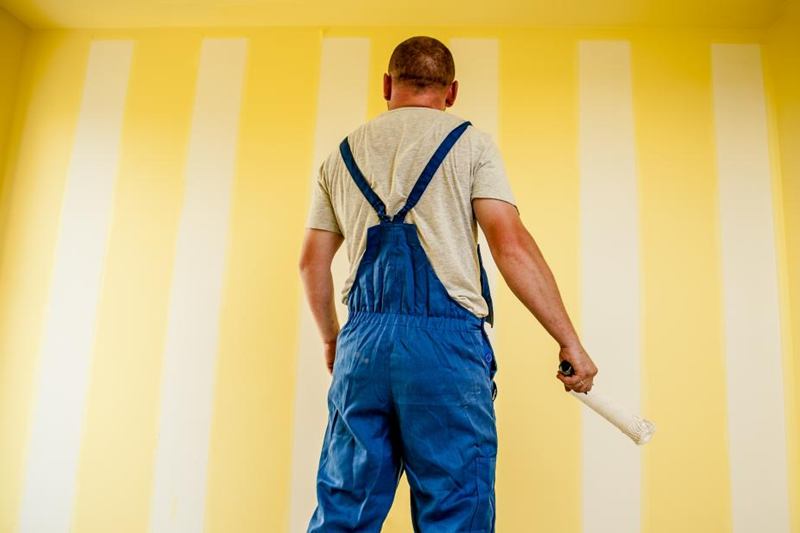
The walls are freshly done and the room looks brand new – but days later it still smells of emulsion. To get rid of a paint smell, you mainly need two things: plenty of fresh air and a little patience. The odour comes from substances that coatings, varnish and primer release into the air as they dry.
Spring is peak decorating season, whether before a move or before a baby arrives. These five tips show how to get fresh air back sooner and what to choose next time.
Why a freshly decorated room smells
Wall coatings, varnishes, thinners and adhesives release volatile organic compounds (VOCs) into indoor air, and some also formaldehyde. The Swiss Federal Office of Public Health (FOPH) points out that new or renovated rooms have raised VOC levels for days to weeks while coatings and glues dry. How strong the odour is and how long it lasts depends mainly on the product:
| Product | Emissions | Typical odour |
|---|---|---|
| Mineral coatings (lime, silicate) | Low | Faint, fades quickly |
| Solvent-free emulsion | Fairly low | Noticeable, but shorter |
| Solvent-based gloss or varnish | High | Sharp, lingers |
| Primer, tinting colour, adhesive | Depends on product | Often underestimated |
A faint smell is therefore normal. If it is still strong after several weeks, something is wrong: perhaps the coat was too thick, the room was not aired enough or a solvent-based product was used.
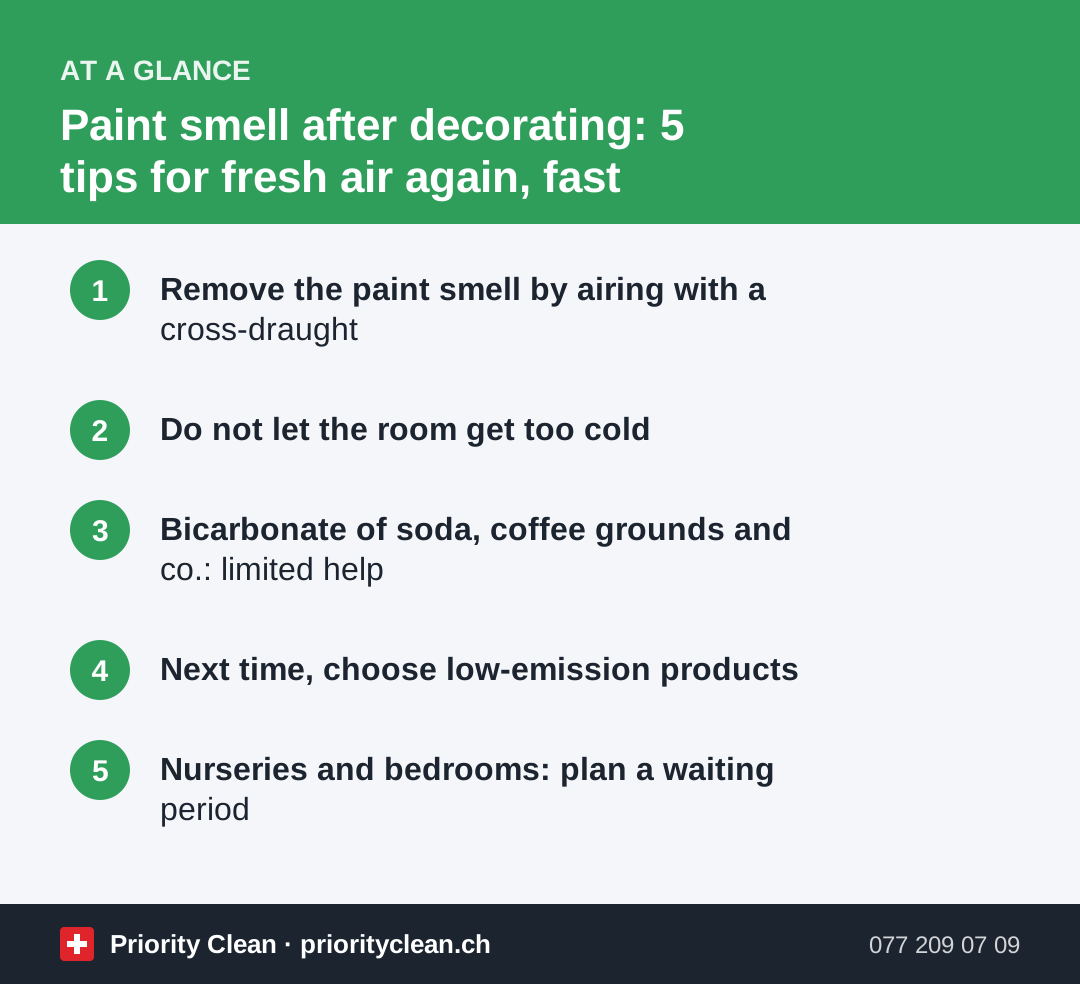
1. Remove the paint smell by airing with a cross-draught
Airing is by far the most effective method. Open the windows fully rather than just tilting them, and create a draught through the flat if you can. The FOPH generally recommends opening windows wide and cross-ventilating where possible. Air several times a day for a few minutes, and more often during the first days after decorating.
The same applies while you work: windows open, doors to the other rooms closed. That way the odour does not spread through the whole home. If possible, do not sleep in the freshly decorated room until the smell has largely gone.
2. Do not let the room get too cold
Coatings dry faster in a pleasantly warm room. In a cold room they stay damp for longer and keep releasing substances for longer. So in cool spring weather, keep heating as normal and combine it with regular short bursts of airing, rather than turning the heating off and leaving the windows permanently tilted.
Do not put fan heaters right in front of freshly coated walls. Even, moderate warmth is enough – with some products, too much heat can cause cracks or patches. Follow the drying times on the tin.
3. Bicarbonate of soda, coffee grounds and co.: limited help
Many household remedies promise to "absorb" the odour: bowls of bicarbonate of soda, coffee grounds, activated charcoal, salt, halved onions or vinegar water. Bicarbonate and activated charcoal can bind some odour, but the effect is small compared with airing. Onions and vinegar mainly mask one smell with another.
These bowls do no harm as long as you place them out of reach of children and pets. Just do not expect miracles, and keep airing. Room sprays and scented candles are not a solution either – they only add more substances to the air.
4. Next time, choose low-emission products
The easiest approach is to stop the odour arising in the first place. According to the FOPH, mineral materials such as lime and silicate coatings emit little, and solvent-free products far less than solvent-based ones. When buying, look for labels that test emissions, such as the Swiss environmental label for paints, natureplus or the Blue Angel. The FOPH also advises choosing low-emission products and applying them correctly when you renovate yourself.
Do not apply coats more thickly than needed, and respect the waiting time between coats. Splashes on floors, glass or tiles come off best while they are fresh – see our guide remove paint splatter.
5. Nurseries and bedrooms: plan a waiting period
Children, pregnant women and people with asthma or sensitive airways react more strongly to emissions. So do not decorate the nursery just before the birth or the move. The FOPH advises planning enough waiting time before moving into new or renovated rooms.
There is no fixed deadline; it depends on the product, the room and the airing. A rule of thumb: as long as you can clearly smell the paint, nobody sleeps in that room. If you move into a freshly renovated flat, air especially consistently in the first weeks. Other causes of unfamiliar odours are covered in our guide new apartment smell.
To get rid of fine dust in every corner after bigger jobs, read our guide cleaning after renovation.
Common mistakes
- Only tilting the windows: the air barely changes and the wall cools down – open fully several times instead.
- Turning off the heating: in a cold room the coat dries more slowly and the odour lingers longer.
- Masking the smell: sprays, candles or onions do not solve the problem.
- Moving in too early: a nursery that still smells strongly is not ready.
- Leftovers down the drain: coating residue does not belong in the washbasin. Your commune can tell you how to dispose of it.
Frequently asked questions
How long does paint smell last?
It depends on the product, the thickness of the coat, the temperature and the airing. According to the FOPH, VOC levels stay raised for days to weeks in freshly decorated rooms. With low-emission products and consistent cross-ventilation, the odour usually fades much sooner.
Can I sleep in a freshly painted room?
Better not, as long as you can clearly smell it. If possible, sleep in another room for a few nights and air the decorated room thoroughly several times a day. This applies especially to children, pregnant women and people with asthma.
Does a bowl of bicarbonate of soda help?
Only a little. Bicarbonate and activated charcoal bind some odour but do not replace airing. Onions or vinegar merely mask it. The air becomes fresh fastest if you open the windows fully several times a day.
Is the smell harmful to health?
It shows that substances from the coating are passing into indoor air. In some people they can cause headaches or irritated airways. Air well, choose low-emission products and see a doctor if symptoms persist – this guide does not replace medical advice.
Thanks for your feedback! Feel free to share the guide.
Thanks! What was missing? Drop us a line – we will improve the guide. WhatsApp