Natural stone looks beautiful in a bathroom or kitchen – until hard water leaves white marks and dull rings around the tap. The reflex is to reach for vinegar or a bathroom descaler. On many stones, that is exactly the wrong move. Limescale on natural stone needs a different approach from limescale on ceramic tiles or glass.
In this guide we explain which stones are sensitive, which five gentle methods work, and when it's better to call a stone specialist.
Why natural stone is so sensitive
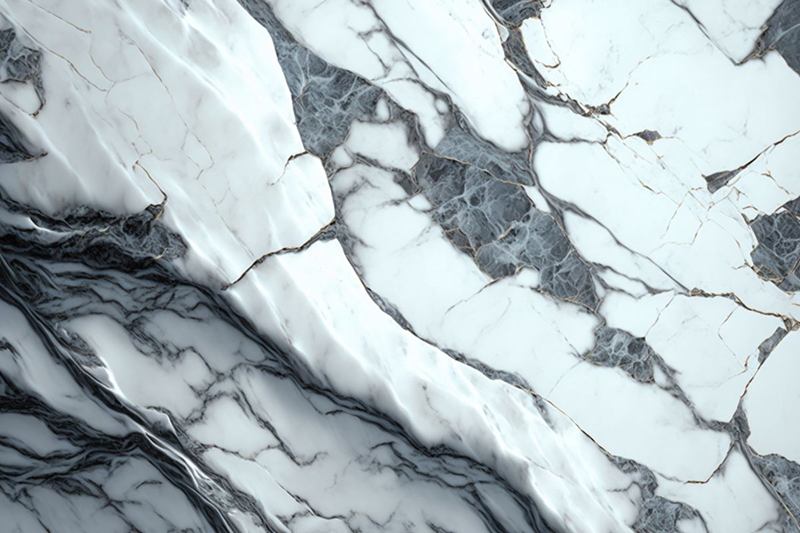
Limescale is calcium carbonate. Marble, limestone and travertine consist largely of the same mineral. An acid can't tell the difference: it dissolves the limescale and the stone surface at the same time. The result is a dull, rough patch – often called "etching".
Swiss tap water is medium-hard to hard in many regions; you can check yours by postcode on trinkwasser.ch. The harder the water, the faster white deposits build up around taps, shower areas and sinks.
| Stone | Sensitive to acids? | Notes |
|---|---|---|
| Marble | Yes, very | Polished surfaces show etching quickly |
| Limestone, Jura stone | Yes | Often used for floors and window sills |
| Travertine | Yes | Porous, often filled |
| Slate | Often | Depends on type – test first |
| Granite, gneiss | Usually more resistant | Sealants and polish can still be damaged |
| Ceramic and porcelain tiles | No | Grout can be sensitive |
If you don't know what your stone is, treat it as acid-sensitive. Ask the landlord or property management – especially before a handover.
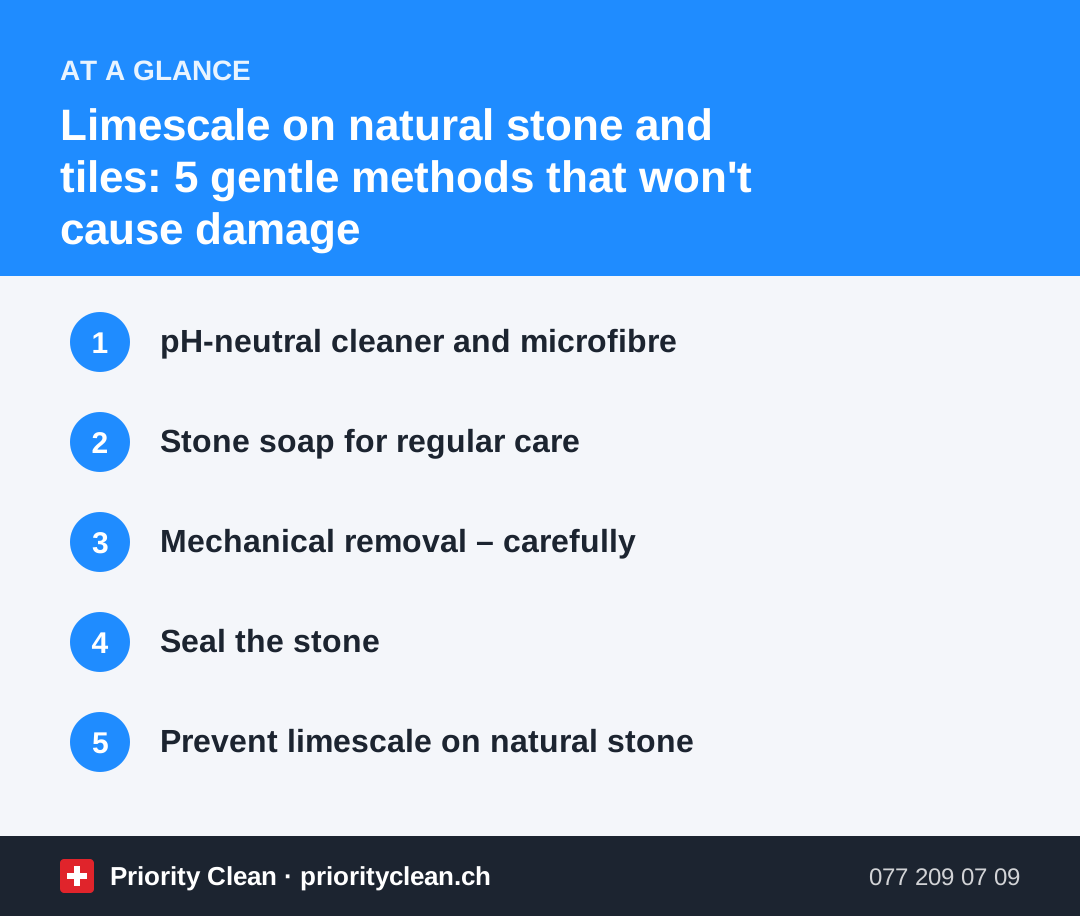
1. pH-neutral cleaner and microfibre
For light limescale and everyday cleaning, a pH-neutral cleaner is the safest choice.
- Mix a pH-neutral cleaner or a special natural stone cleaner with lukewarm water as directed.
- Wipe the surface with a soft microfibre cloth.
- For light marks, work in gentle circular movements without pressure.
- Wipe with clear water and dry with a clean cloth.
This won't remove thick crusts in one go, but repeated regularly, it gradually reduces light deposits without harming the stone.
2. Stone soap for regular care
Stone soap (Steinseife) is available in DIY stores and specialist shops. It cleans gently and leaves a thin protective film.
- Dilute according to the label and apply with a soft cloth or mop.
- Don't rinse off completely – the thin film helps water run off.
- Use regularly on floors, vanity tops and window sills.
3. Mechanical removal – carefully
For stubborn deposits on edges or around taps, gentle mechanical help can work.
- Plastic scraper: Hold it very flat and work slowly on the deposit, not on the stone around it.
- Soft nylon brush: Useful for textured or honed surfaces.
- Avoid: Steel wool, scouring pads, abrasive creams and melamine sponges on polished stone – they leave matt scratches.
If a crust doesn't come off after several gentle attempts, stop. Forcing it usually causes more visible damage than the limescale itself.
4. Seal the stone
A suitable impregnating sealer reduces how deeply water and limescale penetrate porous stones.
- Clean the surface thoroughly and let it dry completely – for porous stone, ideally for a day or more.
- Apply a sealer suitable for your stone type according to the manufacturer's instructions.
- Wipe off the excess before it dries.
- Repeat periodically, depending on use and the product.
In rented flats, check with the property management before sealing, as they may have specific care instructions.
5. Prevent limescale on natural stone
Prevention is much easier than removal.
- Dry after use: Wipe vanity tops and shower walls dry with a squeegee or microfibre cloth.
- Coasters and trays: Protect marble from glasses, soap dishes and toiletries.
- Wipe spills immediately: Wine, juice, cola and vinegar-based dressings contain acids.
- No bathroom descalers: Keep acidic products well away from stone surfaces.
When to call a stone specialist
If the stone is already dull, rough or has light spots where you once used an acid, this is etching damage. Cleaning products won't restore it. A stone specialist can often re-hone and polish the surface. For tenants, it's best to report such damage honestly to the property management rather than trying risky repairs before a handover.
Common mistakes with natural stone
- Using vinegar "just once": Etching can appear within minutes on marble.
- All-purpose bathroom cleaners: Many contain acids – check the label.
- Scouring pads and melamine sponges: Scratch polished surfaces.
- Too much water on porous stone: Can leave dark marks and residue.
- Not testing first: A hidden spot saves a visible disaster.
For ceramic tiles and glass, stronger methods are fine – see our guide on removing limescale in the shower. Grout needs its own care too, as explained in how to clean grout.
Frequently asked questions
Can I use vinegar on marble?
No. Vinegar is an acid and etches marble, limestone and travertine, leaving dull patches. Use pH-neutral cleaners or stone soap instead.
How do I remove hard water stains from natural stone?
Clean repeatedly with a pH-neutral stone cleaner and a microfibre cloth, remove raised deposits very carefully with a plastic scraper, and dry the surface afterwards. For stubborn cases, ask a stone specialist.
How do I know if my stone is sensitive to acid?
Marble, limestone, travertine and many slates are sensitive. If you're unsure, ask the landlord or treat the stone as sensitive. Don't test with acid.
What is the difference between limescale and etching?
Limescale is a white deposit on top of the surface. Etching is damage to the stone itself – a dull, often slightly rough spot that cleaning products can't remove.
Thanks for your feedback! Feel free to share the guide.
Thanks! What was missing? Drop us a line – we will improve the guide. WhatsApp