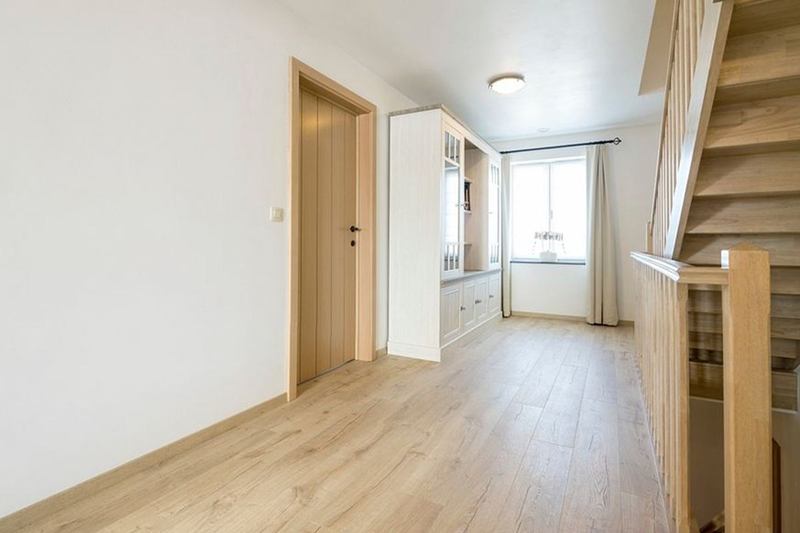
When you move out, you suddenly notice things nobody saw in everyday life: fine scratches on the parquet, a worn carpet in the hallway, a pale patch on the wall where a picture hung for years. Do you have to pay for them? That depends on whether they count as normal wear and tear – and, if they don't, on the lifespan table. It shows how long floors, paintwork and fittings last on average, and therefore how much a damaged item is still worth on handover day.
This guide explains how to tell normal from excessive wear, how the residual value is calculated and what to watch for in the handover report. It provides general information, not legal advice: your rental agreement and the individual case are what count, and the conciliation authority can help in a dispute.
What counts as normal wear and tear
Nobody expects a flat to look brand new when you hand it back. Under Art. 267 CO, tenants return the property in the condition that results from use in line with the contract. Anyone who lives somewhere for years leaves traces – that is normal and already paid for through the rent.
It gets tricky when something is more damaged than usual and the question is how much the item was still worth. For this, the Swiss Tenants' Association (Mieterverband) and the Homeowners' Association (HEV) drew up a joint lifespan table, the paritätische Lebensdauertabelle. It is the basis for telling normal from excessive wear and for setting the residual value when you move out.
1. Tell normal from excessive wear
Is a mark the result of ordinary living, or does it go beyond that? The line is not always sharp, but typical examples help:
| Item | Usually normal wear | Often excessive wear |
|---|---|---|
| Parquet | Fine scratches, dull walkways, dents from furniture | Deep scratches, dark water rings under plants, burn marks |
| Carpet | Worn walkways, slightly faded colour | Large stains, burn holes, scratch or urine damage from pets |
| Walls | Slightly yellowed paint, pale patches behind pictures and furniture | Heavy soiling, scribbles, colours that were not agreed |
| Kitchen and bathroom | Light signs of use on cupboard fronts and taps | Chipped enamel, cracked tiles, burn marks on the worktop |
Dirt, by the way, is not wear: limescale in the bathroom, grease in the cooker hood and dust on the blinds come off before the handover with a thorough clean. For holes in walls, see our guide on filling holes in walls when moving out.
2. Look up the lifespan in the table
If there is excessive wear, the lifespan table comes into play. Here is how to use it:
- Identify the item precisely: not "the floor" but parquet, laminate, fitted carpet or tiles – coverings, paintwork and appliances each have their own value.
- Use the right table: in German-speaking Switzerland this is usually the one from the tenants' and homeowners' associations, in French-speaking Switzerland the FRI and ASLOCA table.
- Find out the age: what counts is when the item was installed or last renewed – not when you moved in.
- Read off the lifespan and compare it with the age.
For orientation, here are some values from the French-speaking Swiss table:
| Item (French-speaking Swiss table) | Average lifespan |
|---|---|
| Wall paint, dispersion or acrylic | 8 years |
| Alkyd or synthetic resin paint | 15 years |
| Rubber window seals | 10 years |
| Straps for roller shutters and blinds | 8 years |
The German-speaking Swiss table may give other values for the same item. Calculate with the table that applies to your flat and, if in doubt, ask the property management which one it uses.
3. Calculate the residual value
If the wear is excessive, what counts is not the price of a new item but its residual value. Simplified:
Residual value = cost of renewal × remaining years ÷ lifespan
An example using the French-speaking Swiss value for dispersion paint: if the paintwork is six years old when you move out, two of its eight years remain. The residual value is therefore a quarter. If a room has to be repainted because of excessive wear, the tenant's share is at most this part of the cost.
| Age of the paintwork (lifespan 8 years) | Residual value |
|---|---|
| 2 years | 75 % |
| 4 years | 50 % |
| 6 years | 25 % |
| 8 years or more | 0 % |
Once an item has reached the end of its lifespan, there is no residual value left on paper. Ask for any claim to be justified in writing, with the age, the lifespan and the calculation.
4. Examples: parquet, carpet and paintwork
Parquet: fine scratches and dull walkways are part of living in a flat; deep scratches from chairs without felt pads or water rings under plant pots are not. A parquet floor can often be sanded rather than replaced – then the cost of that work counts, not a new floor.
Carpet: a fitted carpet wears faster than a wooden floor and, after many years, is often largely written off – so even with a stain, little residual value is left. Many stains also come out with a proper clean.
Paintwork: yellowed walls and paler areas behind furniture are normal after a few years. If you painted walls in bold colours without permission, the property management will often ask you to restore the original state, so agree colour choices in writing before you paint.
5. Check the handover report and respond
At the handover, the property management records defects in the handover report. This is where the lifespan table becomes practical:
- Bring the move-in report: damage that was already noted when you moved in is not your doing.
- Ask questions: which item is affected, how old is it, which lifespan applies?
- Have your view recorded: if you disagree with a point, have it noted in the report.
- Don't sign under pressure: only sign what you agree with.
Does your rental agreement include a flat fee, for example for repainting when you leave? Take a close look: under Art. 267 CO, agreements in which tenants commit in advance to pay compensation beyond covering any actual damage are void. How to respond to defects in the report is explained in our guide to the apartment handover protocol; if money is withheld, see how to get your rent deposit back.
Common mistakes
- Accepting every scratch as damage: signs of use after years in a flat are normal wear and tear.
- Paying the price of a new item: for excessive wear, the residual value is what counts.
- Confusing cleaning with wear: limescale, grease and dust are a cleaning matter, not wear.
- Signing in a hurry: objections raised afterwards are harder to make.
Frequently asked questions
What is normal wear and tear?
The traces that ordinary living leaves behind, such as fine scratches in the parquet, worn walkways on a carpet or slightly yellowed walls. Under Art. 267 CO you return the flat in the condition that results from use in line with the contract, so normal wear and tear is covered by the rent.
What is the Swiss lifespan table?
A joint table by the tenants' and homeowners' associations giving the average lifespan of floors, paintwork and fittings. It helps to tell normal from excessive wear and to work out the residual value when you move out.
How is the residual value calculated?
Simplified: cost of renewal times remaining years, divided by the lifespan in the table. Paintwork with an 8-year lifespan that is 6 years old when you move out has a residual value of 25 %.
Is the lifespan table binding?
The tables are guidelines, not law; the French-speaking Swiss table states expressly that it is not binding. In a dispute, the conciliation authority or a court decides case by case, and tenants' associations offer advice.

Thanks for your feedback! Feel free to share the guide.
Thanks! What was missing? Drop us a line – we will improve the guide. WhatsApp