Period pants are a practical, reusable alternative to pads and tampons. To keep them absorbing reliably and staying leak-proof, though, washing period underwear takes a little more care than ordinary underwear: the multi-layer absorbent gusset is sensitive to heat, fabric softener and the tumble dryer.
The good news is that the care routine is simple once you know the order. Rinse, wash, dry: that keeps them clean and hygienic and helps them last for many cycles, whether you wash at home or in the shared laundry room.
Why period underwear needs special care
A pair of period pants looks like normal underwear but is made of several layers. The top layer wicks moisture quickly away from the skin, an absorbent core below holds the fluid, and a thin barrier layer stops anything from leaking through. These layers are made of technical fibres that don't tolerate everything.
| What damages it | Why | Better |
|---|---|---|
| Hot water for rinsing | blood coagulates and stays in the fibre | rinse cold |
| Fabric softener | coats the fibres, absorbency drops | leave it out |
| Bleach | attacks the fibres and the barrier layer | mild detergent |
| Tumble dryer, radiator | heat can damage the barrier layer | air-dry |
| Wringing | strains seams and layers | squeeze gently |
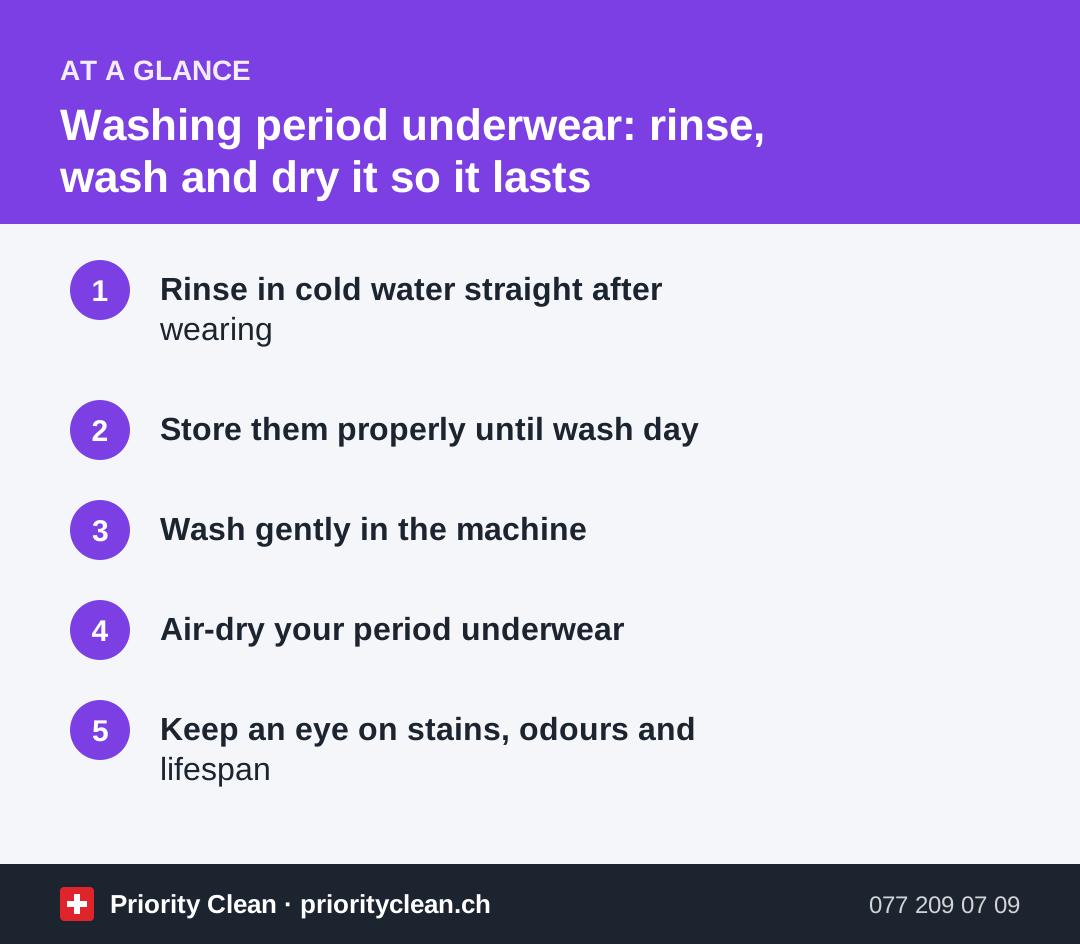
1. Rinse in cold water straight after wearing
After wearing, rinse the pants under cold water, ideally at the washbasin or in the shower. Keep gently squeezing the absorbent area until the water runs clear. Cold water matters: blood contains protein, which coagulates when warm and then sets in the fibre.
Then squeeze the pants out gently – don't wring them. Because you have rinsed them, hardly any blood reaches the washing machine, and your period underwear can go in with the rest of your laundry afterwards.
2. Store them properly until wash day
Few people wash every single pair straight away, and there's no need to. After rinsing, hang the pants somewhere airy, such as the bathroom, until the next load. Left wet and scrunched up in the laundry basket, on the other hand, they quickly start to smell.
Plan your laundry so that worn pairs go into the machine within a few days. If you can only use the shared laundry room on certain days, simply wash them with your normal laundry.
3. Wash gently in the machine
Most manufacturers allow machine washing. Check the care label: the number in the washtub gives the maximum temperature, and a bar underneath means a gentle cycle. What each symbol means is explained in GINETEX's care-symbol index.
How to wash them properly:
- Use a laundry bag: it protects against friction and stops bra hooks or zips from snagging the fabric.
- 30–40 °C: higher is usually not allowed and not necessary, since you have already rinsed them.
- Mild detergent: a colour or delicates detergent without bleach.
- Don't overdose: residue builds up in the absorbent layer. SwissEnergy advises in any case not to increase the detergent dose at low temperatures.
- Wash with dark colours: period pants are usually black or dark and go well with a dark load.
How to dose detergent according to water hardness is covered in our guide to laundry detergent dosage.
Prefer to wash by hand? That works too: briefly squeeze them through lukewarm water with a little delicates detergent, rinse thoroughly in clean water and squeeze out gently. According to the care symbols, hand washing means 40 °C at most, without rubbing or wringing.
4. Air-dry your period underwear
After washing, hang the pants on a clothes airer or a line. The absorbent gusset is thicker than the rest of the fabric and takes longer to dry – up to a day or more, depending on the model and the room. Turn them inside out halfway through so the inner layers dry properly too.
Skip the tumble dryer and don't put them directly on the radiator. Heat can damage the barrier layer, and the pants will then no longer be reliably leak-proof. Ironing is also off-limits. So make sure you have enough pairs that there's always a dry one ready.
5. Keep an eye on stains, odours and lifespan
Stains: if brown marks remain after washing, pre-treat them with cold water and a little gall soap, provided the manufacturer allows it. For more tips, see our guide to removing blood stains. A faint shadow on the dark top layer is not a hygiene problem, by the way.
Odours: if a pair still smells after washing, the rinse usually wasn't thorough enough or it stayed wet for too long. Rinse it longer in cold water and check that you aren't using too much detergent.
Lifespan: many manufacturers state how long their period underwear lasts with proper care. Replace a pair when it no longer reliably stops leaks, the absorbent layer feels thin or the elastic has gone slack. Ask your commune whether worn-out pairs go into the textile collection or the household rubbish.
The most common mistakes
- Rinsing in warm water: the blood coagulates and stays as a stain in the absorbent layer.
- Fabric softener out of habit: it makes the fibres water-repellent, so the pants absorb less well.
- Tumble drying to save time: the barrier layer can be damaged.
- Leaving them wet in the basket for days: this causes an odour that is hard to wash out.
- Too much detergent: residue clogs the fibres of the absorbent layer.
How to wash ordinary underwear and which temperature makes sense is explained in our guide to washing underwear.
Frequently asked questions
Can I wash period underwear with my normal laundry?
Yes, as long as you have rinsed it in cold water beforehand until the water runs clear. Wash it in a laundry bag with similar colours, at the temperature the label allows and without fabric softener.
What temperature should period pants be washed at?
Usually 30–40 °C. The care label is what counts. Higher temperatures are generally not intended or necessary, because the blood has already been removed during rinsing.
Why can't period underwear go in the tumble dryer?
The heat can damage the thin barrier layer that prevents leaks. So air-dry the pants, unless the manufacturer explicitly allows tumble drying.
How long does period underwear last?
That depends on the model and how you care for it. Many manufacturers give guidance. Replace a pair when it no longer stops leaks, the absorbent layer gets thinner or the elastic loosens.
Thanks for your feedback! Feel free to share the guide.
Thanks! What was missing? Drop us a line – we will improve the guide. WhatsApp