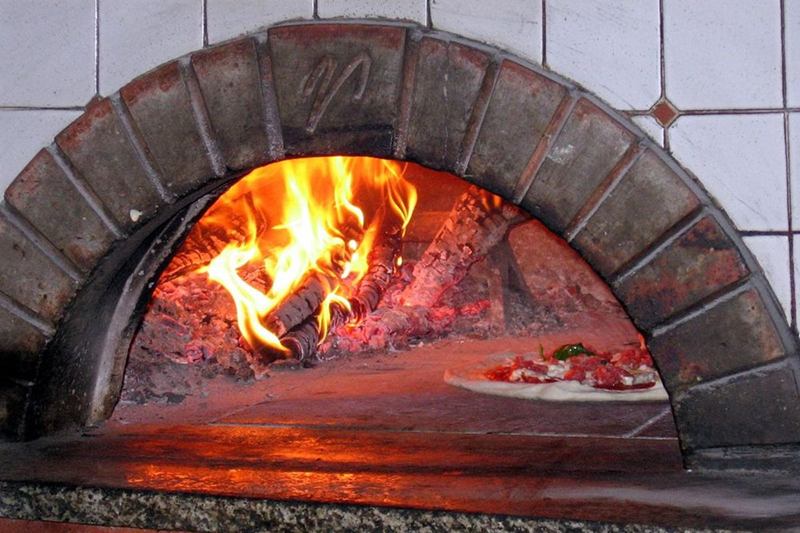
The first pizza night of the season is over, the garden still smells of wood smoke – and charred cheese and flour are stuck to the oven floor. When people want to clean a pizza oven, many reach for a sponge and washing-up liquid first. That is exactly what harms the stone most. In a pizza oven, heat, a good brush and a little patience do most of the work.
Whether it is a brick wood-fired oven in the garden or a compact gas oven on the terrace, the five steps below show how to treat the stone, the oven chamber, the ash and the outer shell – and stay safe while you do it.
Why a pizza oven is cleaned differently
The floor of a pizza oven is usually made of firebrick (chamotte) or cordierite. These stones are porous: they store heat and draw moisture out of the dough so the base turns crisp. That is also what makes them sensitive. Washing-up liquid soaks into the pores and can leave a soapy taste next time you bake. Water in the stone turns to steam suddenly as the oven heats up and can cause cracks.
A wood-fired oven also works with an open fire. For fireplaces and wood stoves, the Swiss fire prevention advice centre (BFB) recommends burning only untreated, well-dried wood, protecting flammable materials from flying sparks and having the installation maintained by a professional. The same principles apply to a pizza oven in the garden.
| Area | How to clean | What to avoid |
|---|---|---|
| Baking stone | Burn off, scraper, brass or natural-fibre brush | Soap, washing-up liquid, soaking, oven cleaner |
| Oven chamber and dome | High heat, dry brushing | Water in the hot oven, chemicals |
| Ash | Cooled down, in a metal bucket | Warm ash in the bin or on the compost |
| Stainless steel shell | Warm water, mild product, microfibre cloth | Steel wool, cream cleaner, chlorine-based cleaners |
| Gas oven | Run empty on high as per the manual, keep the burner dry | Water on the burner and gas connection |
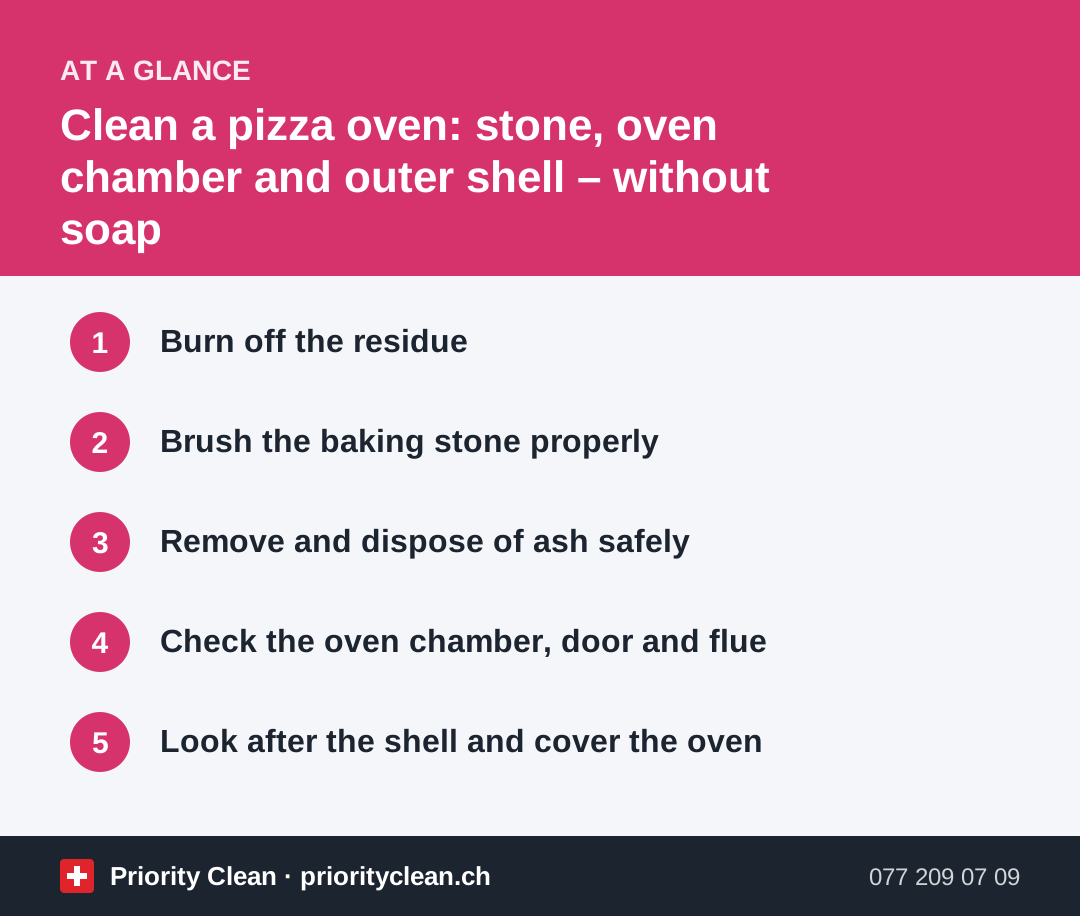
1. Burn off the residue
After baking, it is worth letting the fire burn a little longer, or running a gas oven on high for a few minutes as the manual describes. Fallen cheese, bits of dough and flour char and turn into ash that is easy to brush away later.
Soot on the dome often disappears by itself at high temperature, too. If the inner wall stays black all the time, the fire was often too weak or the wood too damp. A strong fire with dry wood cleans the oven chamber better than any product.
2. Brush the baking stone properly
When the oven has cooled a little but is still warm, residue comes off most easily. Push larger bits together with a dough scraper or spatula. Then brush the stone with a long-handled oven brush with brass or natural-fibre bristles – always in one direction and without much force.
- Baked-on residue: let it burn off the next time you fire the oven, then scrape it away.
- Dark stains: are normal and not dirt. They affect neither taste nor hygiene.
- Grease stains: burn them off with heat rather than treating them with a product.
For a removable pizza stone that you also use in your kitchen oven or on the barbecue, see our guide How to clean a pizza stone.
3. Remove and dispose of ash safely
Ash from a pizza oven often looks cold after a short time but can hide pockets of embers for much longer. The fire prevention advice centre advises always letting ash from fireplaces, charcoal grills or pellet stoves cool down completely – for at least 48 hours – and disposing of it properly.
- Only take the ash out once the oven and embers have cooled down completely.
- Use a shovel and hand brush to put it into a metal bucket with a lid, never a plastic one.
- Place the bucket on a non-flammable surface, away from wooden walls, hedges and furniture.
- Only then put it out with the household rubbish, following your commune's rules.
More details in our guide How to dispose of ash.
4. Check the oven chamber, door and flue
After brushing, take a look inside the oven chamber. Cracks in the masonry, loose bricks or crumbling mortar are a job for a professional. Wipe the outside of the door with a damp cloth. Clean a glass window when cold with a damp cloth and a little fine wood ash, then wipe it with clean water.
If your oven has a chimney or flue pipe, check regularly whether soot is building up. For a built-in oven connected to a chimney, ask your chimney sweep how often it needs checking. On a gas oven, check the burner, hose and connection as the manufacturer specifies and keep the burner dry.
5. Look after the shell and cover the oven
The outer shell takes a lot: grease splashes, flying ash, pollen and rain. Depending on the material:
- Stainless steel: wipe with warm water, a drop of mild washing-up liquid and a microfibre cloth along the grain, then dry. Details in our guide How to clean stainless steel.
- Powder-coated or painted: wipe with a damp cloth, nothing abrasive.
- Rendered or brick: brush dry, with clean water if needed.
On the outer shell, washing-up liquid is fine – just not inside the oven. Once the oven has cooled completely, protect it from rain and leaves with a suitable, breathable cover.
The most common mistakes
- Scrubbing the stone with washing-up liquid: soap soaks into the pores and affects the taste.
- Soaking the stone or heating it wet: the water turns to steam suddenly and the stone can crack.
- Oven cleaner in the oven chamber: it isn't designed for pizza ovens and can contain corrosive substances.
- Warm ash in the bin: even ash that seems cold can still contain embers.
- Damp or treated wood: it produces soot, smoke and unpleasant smells.
Frequently asked questions
Can you clean a pizza oven with water?
Not the stone: it is porous and absorbs water, which can cause cracks when the oven heats up. At most, a barely damp cloth on the cold stone is fine, as long as it dries completely afterwards. The outer shell can be wiped with a damp cloth.
How do I get black stains off the stone?
You don't have to: dark discolouration is normal and not a hygiene problem. Let loose residue burn off the next time you fire the oven, then brush it away.
When can I throw away the ash from the pizza oven?
Only once it has cooled down completely. The fire prevention advice centre says at least 48 hours. Until then, leave the ash in the oven or in a closed metal bucket on a non-flammable surface.
How do I clean a gas pizza oven?
After baking, run it on high for a few minutes, brush the cold stone and wipe the outer shell with a damp cloth. The burner and gas connection must stay dry. Follow the manufacturer's instructions.
Thanks for your feedback! Feel free to share the guide.
Thanks! What was missing? Drop us a line – we will improve the guide. WhatsApp