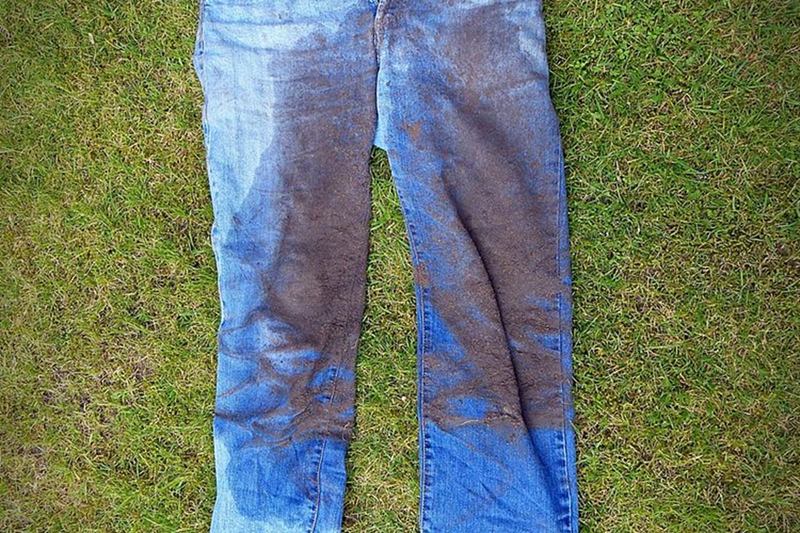
Spring brings soft meadows, wet forest tracks and football pitches that look more like a ploughed field than a lawn. At home the result lands outside the laundry room, and when it comes to mud stains almost everyone makes the same mistake: reaching for a wet cloth.
That is exactly the wrong move. Soil consists largely of extremely fine mineral particles, and water is what drives them into the weave. Five steps in the right order get nearly all of it out again.
Why mud stains are so stubborn
Soil is not one uniform kind of dirt but a mixture: sand and grit sit on top, fine clay and silt particles work their way between the fibres, and humus and iron-bearing minerals add the typical reddish-brown tone. Depending on the ground, grass and leaf pigments come along for the ride.
That explains why rubbing is counterproductive: water washes the fine particles deeper into the fabric, and friction works them in. Dry, by contrast, most of it comes away mechanically – and the less stays in the weave, the less the product has to do.
| Type of mark | Typical look | First move |
|---|---|---|
| Dry soil | crumbly, falls away | knock out and brush |
| Wet mud | smeary, dark | let it dry, then brush |
| Clay | hard, pale brown | let it set, break it up, brush |
| Mud with grass | greenish edges | after brushing, treat like grass |
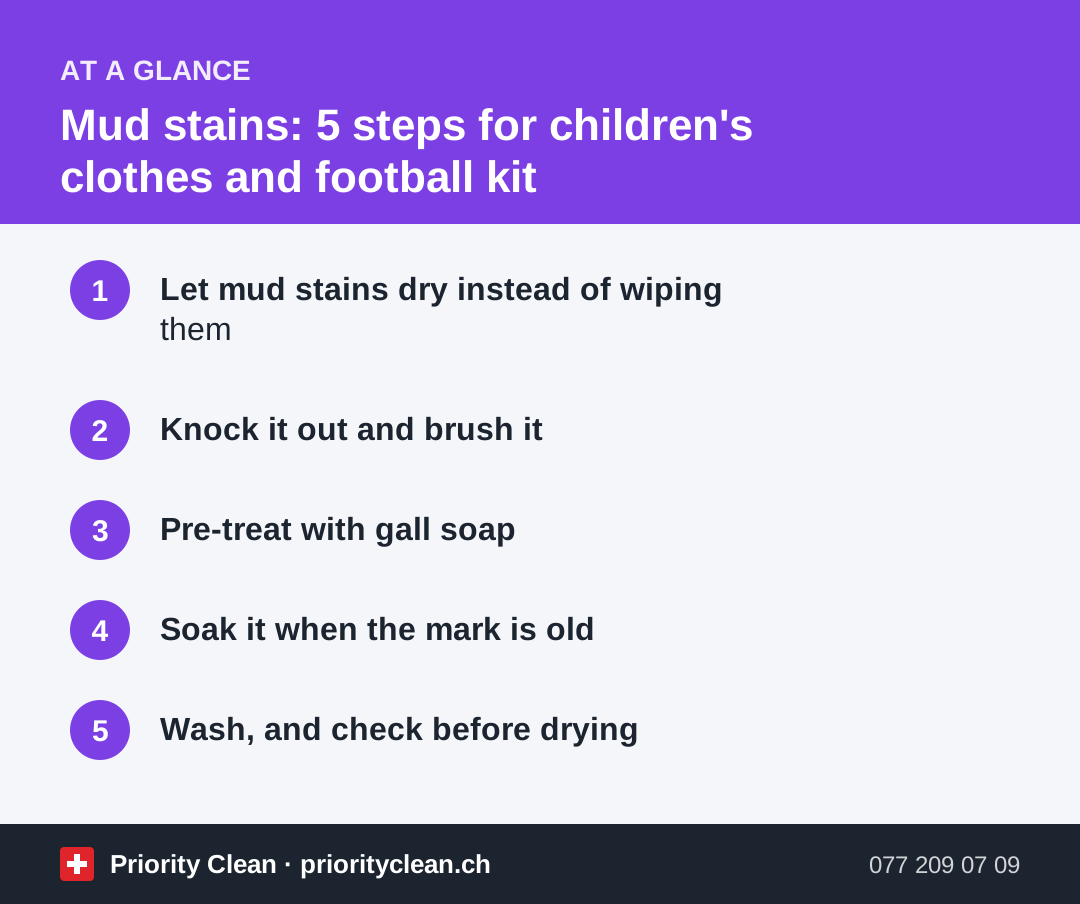
1. Let mud stains dry instead of wiping them
Hang the trousers, kit or jacket up and let the dirt dry completely – outdoors, in the attic or in the laundry room, but not on a radiator and not in the tumble dryer. Heat can fix the pigments.
Depending on the amount, that takes a few hours. The time is well spent: a dry mark comes out about eighty per cent mechanically, a wet one hardly at all.
2. Knock it out and brush it
Knock the garment out outdoors or over the sink, then take off the rest with a clothes brush or a soft nail brush. Work along the grain of the fabric and without pressure – hard brushes rough up cotton and leave the area looking paler afterwards.
On synthetic sportswear the dirt usually sits on the surface, so light brushing is often enough. Anyone with allergies should brush outdoors, because dry soil raises dust.
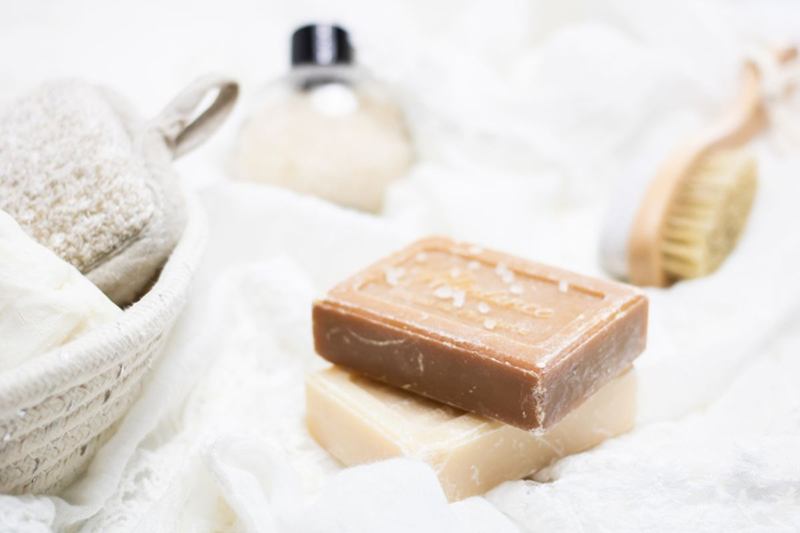
3. Pre-treat with gall soap
What remains is the actual mark: a brownish shadow of clay, humus and iron. Dampen it with lukewarm water and pre-treat:
- Gall soap rubbed in, left for ten to thirty minutes, then rinsed.
- Liquid detergent applied directly and worked in gently.
- Curd soap and a brush on hard-wearing fabrics such as denim.
- Oxygen bleach only on white, washable cotton and strictly as the pack says.
The Swiss consumer protection foundation lists curd soap, bicarbonate of soda, vinegar and lemon juice among the household remedies that replace cleaning products. How to use gall soap properly is covered in our guide to gall soap; for greenish edges, see removing grass stains.
4. Soak it when the mark is old
For dried mud, clay or sports kit worn several times, a soak is worth it: lukewarm water, a little detergent, one to two hours, or overnight in stubborn cases.
Three things matter: lukewarm only, because heat fixes pigments; only textiles the care label allows – wool, silk and leather stay out; and a rinse before the machine, so the loosened dirt does not settle back in.
5. Wash, and check before drying
The machine handles the rest. According to GINETEX the number in the wash tub symbol is the maximum washing temperature in degrees Celsius, so an upper limit rather than a recommendation; bars under the tub indicate a gentler programme. SwissEnergy advises low temperatures, eco programmes and full loads anyway, without increasing the detergent dose.
In practice: children's cotton trousers at 40 °C, football kit and technical shirts as the label says and without fabric softener, whites with a universal detergent if needed. And above all: check first, dry second. Anything left that goes through the dryer stays.
Rugs, upholstery and shoes
Here too, let everything dry first. On a rug or sofa, vacuum the dried soil out thoroughly rather than working it in wet. Only then treat the remaining shadow in spots, with as little moisture as possible, dabbing from the outside in. The full approach is described in our guide on a stain on the rug: first aid.
Football boots and walking boots should be knocked out, brushed dry underneath and then cleaned damp on the uppers. Dry them stuffed with newspaper at room temperature – never on a radiator, which warps leather and loosens glued seams.
Common mistakes
- Wiping it wet: this spreads the fine particles and turns a mark into an area.
- Washing hot: it fixes the pigments from humus and grass.
- A hard brush on fine fabric: it roughens the fibres and leaves a paler patch.
- Straight into the machine: loose soil ends up in the drum, the filter and the rest of the wash.
- Tumble drying before checking: whatever is still there usually stays for good.
Frequently asked questions
Should I rinse mud stains out straight away?
No. Let the dirt dry completely, then knock and brush it off. Water carries the fine clay and silt particles deeper into the fabric, and rubbing works them in further still.
What helps against old mud stains?
Brush dry, pre-treat with gall soap or liquid detergent, then soak for one to two hours in lukewarm water. On white cotton you can add an oxygen-based product, following the pack. Wash as usual afterwards and check before drying.
At what temperature should I wash football kit?
As the care label says, usually 30 to 40 °C, and without fabric softener: it coats technical fibres and reduces the way they move moisture. The number in the symbol is a maximum, so washing cooler is always allowed.
How do I get mud out of a rug?
Let it dry and vacuum thoroughly instead of rubbing it wet. Then dab the remaining shadow with a little water and a light-coloured cloth, working from the outside in, and let it dry properly. For large areas, a machine or professional cleaning is worth it.
Thanks for your feedback! Feel free to share the guide.
Thanks! What was missing? Drop us a line – we will improve the guide. WhatsApp