You clean the washbasin with bleach, a few drops splash, and the next day a pale, almost orange mark shows up on your navy jumper. With bleach stains you need to accept an uncomfortable truth: the chlorine hasn't left any dirt behind – it has destroyed the colour. No amount of washing will bring it back.
Acting fast still pays off. You can stop the mark from spreading or the fabric from wearing through, and then make it much less visible. This guide explains what really helps, which online tips are dangerous and how to avoid these accidents on your next cleaning day.
Why bleach stains can't be removed
Household bleach (in Switzerland usually sold as Javel) and many chlorine-based cleaners contain sodium hypochlorite. It is a strong oxidising agent: it breaks down the dye molecules in the fibre so they no longer reflect light in their original colour. That is exactly why bleach whitens so reliably – and why a bleach stain isn't a stain in the usual sense. There is nothing to dissolve or lift out.
Depending on the fabric, the damage looks different:
| Fabric | What the bleach mark looks like |
|---|---|
| Black, navy | Pale, often reddish, orange or pink |
| Coloured cotton | Patchy fading, often with sharp edges |
| White synthetics, elastane | Yellowing rather than lightening |
| Wool, silk | Yellowing, the fibre becomes brittle |
The catch: these marks often only appear after a few hours or after the next wash. An unnoticed drop keeps working until it is rinsed out. If chlorine stays in the fibre for a long time, it also attacks the material itself: the spot becomes thin and may later turn into a hole.
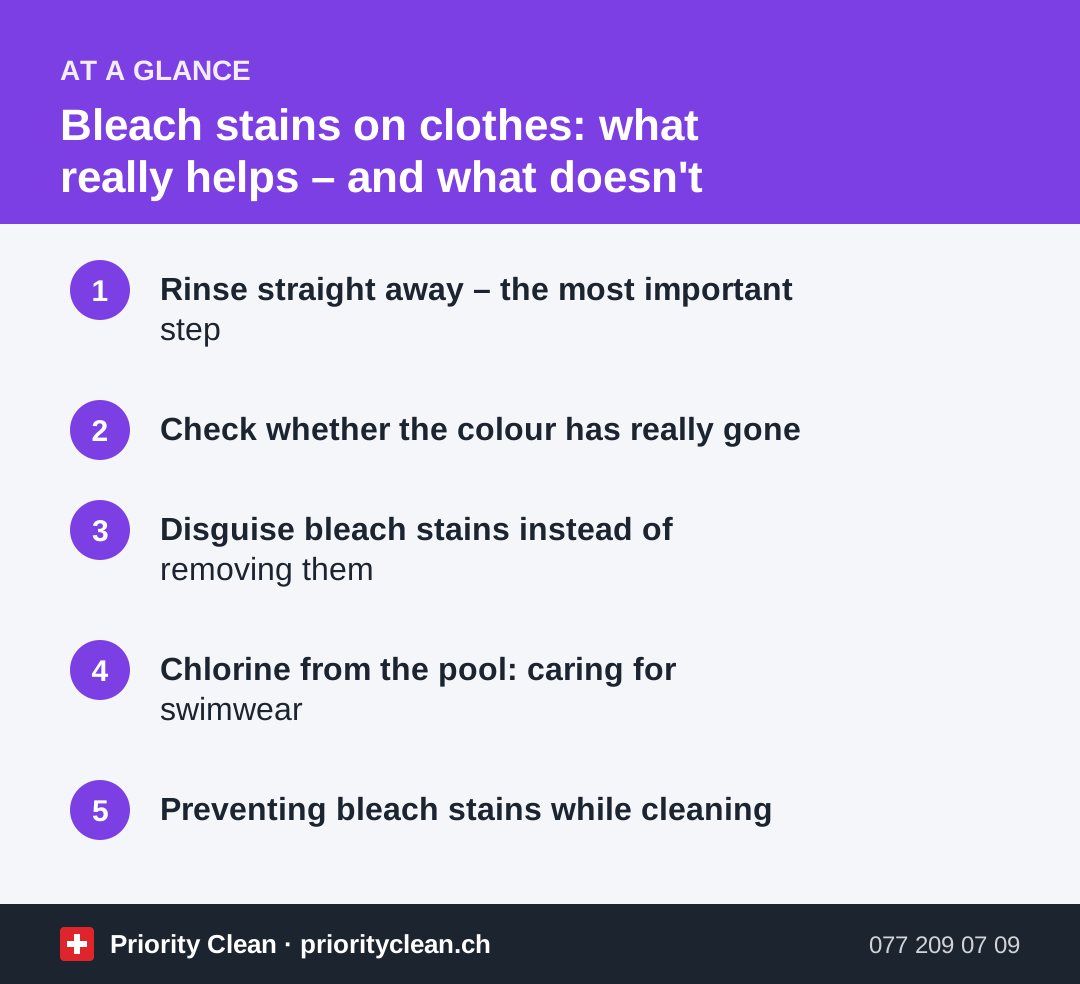
1. Rinse straight away – the most important step
As soon as you notice a splash, take the garment off and hold the spot under cold running water. Rinse for several minutes from the back of the fabric, so the chlorine is flushed out of the fibre instead of being spread around. Then wash the item as usual, on its own or with a small load.
Important: don't rub, and don't add other products "to help". Rubbing spreads the chlorine and makes the mark bigger.
2. Check whether the colour has really gone
Once the garment is dry, you can see the extent of the damage. Sometimes only a small dot is lighter; sometimes a larger area is affected. Look at it in daylight:
- Slightly lighter: the spot is paler but still coloured. It is easy to disguise.
- Clearly bleached: a reddish or orange tone on black or navy. Re-dyeing is the best option.
- Damaged fibre: the spot feels thin or rough. The garment is best kept for housework or gardening.
On white synthetics or fabrics with elastane, yellowing is usually permanent too. A wash with an all-purpose detergent according to the care label is worth a try; adding more bleach, on the other hand, makes the yellowing worse.
3. Disguise bleach stains instead of removing them
If the stain can't be removed, you can still hide it. There are three options, depending on the size:
- Fabric pen or fabric marker: for small dots on cotton. Choose a shade slightly darker rather than lighter, dab the colour on thinly and fix it according to the manufacturer's instructions, usually by ironing.
- Dye the whole garment: fabric dye for the washing machine or for hand dyeing is sold in specialist shops and at the big supermarket chains. Choose the same colour or a darker one. Cotton, linen and viscose take dye well, polyester hardly at all.
- Get creative: a patch, embroidery or a pocket sewn over the spot – a practical solution for children's clothes and workwear.
4. Chlorine from the pool: caring for swimwear
Pool water contains chlorine too, but in a very diluted form. It doesn't cause sudden stains, but over time it fades colours and wears out elastane. Rinse swimsuits and trunks with clean water straight after swimming, don't leave them wet in your bag, and dry them in the shade. For gentle washing tips, see our guide How to wash a swimsuit.
Towels from the swimming pool should go into the wash soon as well. On dark towels, pale patches often come from hair or hands still wet with chlorinated water.
5. Preventing bleach stains while cleaning
Most of these accidents happen at home: when treating mould in the shower, cleaning the toilet or whitening tile grout. Prevention is simple:
Tox Info Suisse advises keeping cleaning products in their original packaging and reading labels and hazard symbols before use. Never decant bleach into a drinks bottle or an unlabelled spray bottle. For more on how to use it safely, read our guide Using chlorine bleach safely.
Many jobs don't need chlorine at all, by the way. For limescale, grease or light marks, simple products are often enough – see our overview Home remedies for stains.
Common mistakes
- Vinegar to neutralise: acid and chlorine together can release toxic gas.
- Scrubbing hard: the stain gets bigger and the fibre suffers.
- More bleach to "even it out": bleaching the whole surface evenly almost never works.
- Trying stain removers: they dissolve dirt but don't restore colour – wasted time and money.
- Forgetting to rinse: an unnoticed drop keeps bleaching and can cause a hole.
Frequently asked questions
Can you remove bleach stains from clothes?
Not in the true sense. Chlorine destroys the dye in the fibre. You can only disguise the spot, for example with a fabric pen or by dyeing the whole garment.
Does vinegar help with bleach stains?
No – and as long as chlorine is still in the fabric, it is actually dangerous: acid and chlorine can form toxic chlorine gas. Simply rinse the spot thoroughly with cold water.
Why is the bleach stain on black clothes orange?
Black fabrics are often dyed with a mixture of dyes. Chlorine destroys them at different speeds, and the most resistant one stays visible – often a reddish or orange tone.
Does pool water fade swimsuits?
Yes, over time, because it contains diluted chlorine. Rinse your swimsuit with clean water after every swim and dry it in the shade, and its colour and stretch will last longer.
Thanks for your feedback! Feel free to share the guide.
Thanks! What was missing? Drop us a line – we will improve the guide. WhatsApp