As soon as the weather warms up, the linen shirt, the light trousers and the cool summer bedding come out of the wardrobe. Many people hesitate before the first machine load, though, and the question "Will it shrink?" is a fair one. If you want to know how to wash linen without it shrinking or turning stiff, you don't need special products – just the right temperature, enough room in the drum and a little patience when drying.
The fabric is robust, but it doesn't forgive the heat of a tumble dryer or a crammed drum. The five tips below apply to pure flax fabrics as well as to blends with cotton.
Why linen shrinks in the wash
This fabric is made from the stem fibres of the flax plant. These fibres are long, smooth and have very little stretch. They absorb a lot of water, swell, and contract again as they dry. Add heat and heavy tumbling, and the weave tightens – the garment gets shorter or narrower.
The first wash is the trickiest. Fabric that the manufacturer has not pre-washed can shrink noticeably. If the label or packaging says "pre-washed" or "stone washed", the risk is much lower.
| Problem | Common cause |
|---|---|
| Garment shorter or tighter | Washed too hot, tumble dried, first wash without pre-washing |
| Deep, sharp creases | Full drum, high spin speed, washing left sitting in the machine |
| Pale streaks along edges and seams | Heavy friction in an overloaded drum |
| Fabric feels stiff as a board | Dried in blazing sun or on a radiator, detergent residue |
If something has already shrunk, our guide on clothes that have shrunk covers a few options – although there is no guarantee it will return to its exact original size.
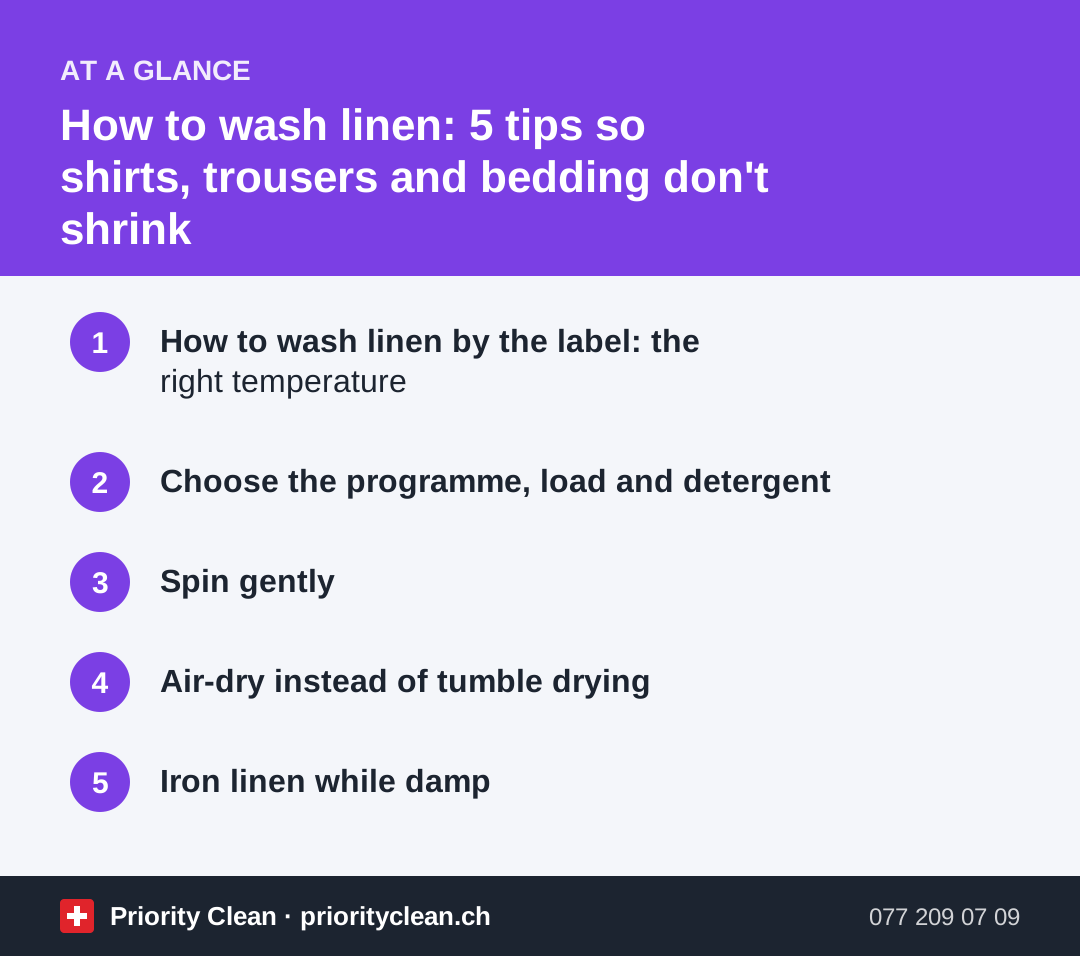
1. How to wash linen by the label: the right temperature
The number in the wash-tub symbol on the care label is the maximum, not a recommendation. As GINETEX's care-symbol index explains, one or two bars under the tub mean a milder cycle with less mechanical action. They are common on flax garments.
| Item | Typical temperature | Note |
|---|---|---|
| Coloured shirt, blouse, trousers | 30–40 °C | Colours stay fresh for longer |
| Dress, skirt, lined jacket | per label, often hand wash or dry cleaning | Linings and interfacing may react differently |
| White bed linen, tablecloths | up to the value on the label | Only if the label allows it |
| Blend with cotton | per label | Behaves much the same |
For everyday clothes, 30 to 40 °C is usually plenty. The Swiss energy programme EnergieSchweiz recommends choosing low temperatures of 20 to 30 °C and eco programmes anyway – it saves electricity and is kinder to the fibre. Keep hotter programmes for white bed linen or tablecloths, where the label permits.
2. Choose the programme, load and detergent
This fabric soaks up a lot of water and becomes very heavy when wet. To give it room to move, fill the drum only about halfway. The fabric rubs less and you get fewer hard creases.
- Programme: easy-care, delicates or a dedicated linen programme if your machine has one.
- Sort colours: new, strongly dyed pieces can bleed in the first few cycles – put it in on its own or with similar shades.
- Detergent: for colours, a colour or delicates detergent without bleach or optical brighteners; for whites, a regular heavy-duty detergent.
- No fabric softener: the fabric gets softer on its own with every wash. Softener coats the fibre and reduces absorbency.
Turn dark linen inside out so that pale patches don't appear along edges and seams. How much detergent you need depends on your water hardness – see our guide to dosing laundry detergent.
3. Spin gently
A high spin speed presses wet linen against the drum wall and creates sharp creases that are hard to iron out later. Choose a low spin speed or the spin setting of the delicates programme.
It will take a little longer to dry, but it hangs out better and saves you work at the ironing board. Never wring it by hand – it twists the fibres and leaves creases.
4. Air-dry instead of tumble drying
The tumble dryer is the most common reason for shrunken linen: heat plus constant movement tighten the fibre. That's why many labels show a crossed-out circle inside a square – do not tumble dry.
To dry it well:
- Give each piece a good shake when it comes out of the machine.
- Hang shirts and blouses on a hanger and smooth the collar, cuffs and button placket by hand.
- Hang trousers by the waistband and pull the legs straight lengthwise.
- Drape bedding and tablecloths loosely over the airer so that air can circulate.
- Dry coloured linen in the shade – not in the midday sun and not directly on a radiator.
5. Iron linen while damp
Linen tolerates high heat, but stick to the dots in the iron symbol. According to GINETEX, three dots mean a maximum of 210 °C, two dots 160 °C and one dot 120 °C. Blends with synthetic fibres usually need less heat than pure linen.
- Iron linen while it is still slightly damp. If it's already dry, spray it with water or use steam.
- Iron dark linen on the reverse to avoid shiny marks.
- For shirts, start with the collar and cuffs, then move on to the sleeves and body.
The most common mistakes
- Washing too hot: a few extra degrees won't get everyday linen any cleaner, but they increase the risk of shrinking.
- Drum filled to the brim: linen needs room to move, otherwise it creases and shows wear from rubbing.
- "Just a quick spin" in the dryer: even a short, warm cycle can change the size.
- Ignoring stains: pre-treat fresh stains before washing – on pale linen, for example, with ox-gall soap after testing it on a hidden spot.
- Chlorine bleach: it attacks the fibre and can leave coloured linen blotchy.
Frequently asked questions
Does linen shrink when washed?
It can, especially in the first wash, at high temperatures and in the tumble dryer. If you follow the label, wash cool, fill the drum only halfway and air-dry, the risk stays low. Linen that has already been pre-washed rarely shrinks much further.
What temperature should linen be washed at?
The care label is what counts. Coloured linen clothing usually does well at 30 to 40 °C. White bed linen or tablecloths can often be washed hotter, but only if the label explicitly allows it.
Can linen go in the tumble dryer?
Only if the label explicitly permits it – and even then it's better not to. Heat and movement are the main cause of shrunken linen. Air-drying on a hanger or rack is gentler and saves electricity.
How do I keep linen from creasing?
Linen will never be completely crease-free – that's part of its character. But a half-full drum, a low spin speed, hanging it up immediately and ironing it damp all make the creases much softer.
Thanks for your feedback! Feel free to share the guide.
Thanks! What was missing? Drop us a line – we will improve the guide. WhatsApp