The light summer dress, the flowing blouse, the colourful top: many favourite warm-weather pieces are made of viscose. The fabric feels cool and soft and drapes beautifully. After the first wash, though, some people get a nasty surprise – the dress is suddenly shorter or has lost its shape. If you want to know how to wash viscose properly, remember one thing above all: the fibre is far more fragile wet than dry.
Hand wash or machine? The care label decides. With the five rules below, both methods work without your favourite pieces shrinking, stretching out or developing shiny patches.
Why viscose is so delicate
Viscose isn't a natural fibre in the classic sense, but it isn't a petroleum-based synthetic either. It is made from cellulose, usually from wood, which is dissolved chemically and spun into new fibres. The result is soft, breathable and absorbs moisture well.
That absorbency is exactly what makes washing tricky: in water, viscose swells considerably and becomes less tear-resistant. If you pull, rub or spin the wet fabric hard, it distorts. As it dries it contracts again – and the garment may end up smaller or twisted.
| What happens | Common cause |
|---|---|
| Dress or blouse has shrunk | Water too warm, tumble dryer, high spin speed |
| Fabric distorted or twisted | Wrung out wet, hung up heavy with water |
| Shiny patches | Ironed too hot, directly on the right side |
| Heavy creasing | Full drum, left wet for too long |
Related fibres such as modal and lyocell are also made from cellulose. How delicate they are varies from fabric to fabric – the care label always has the final say.
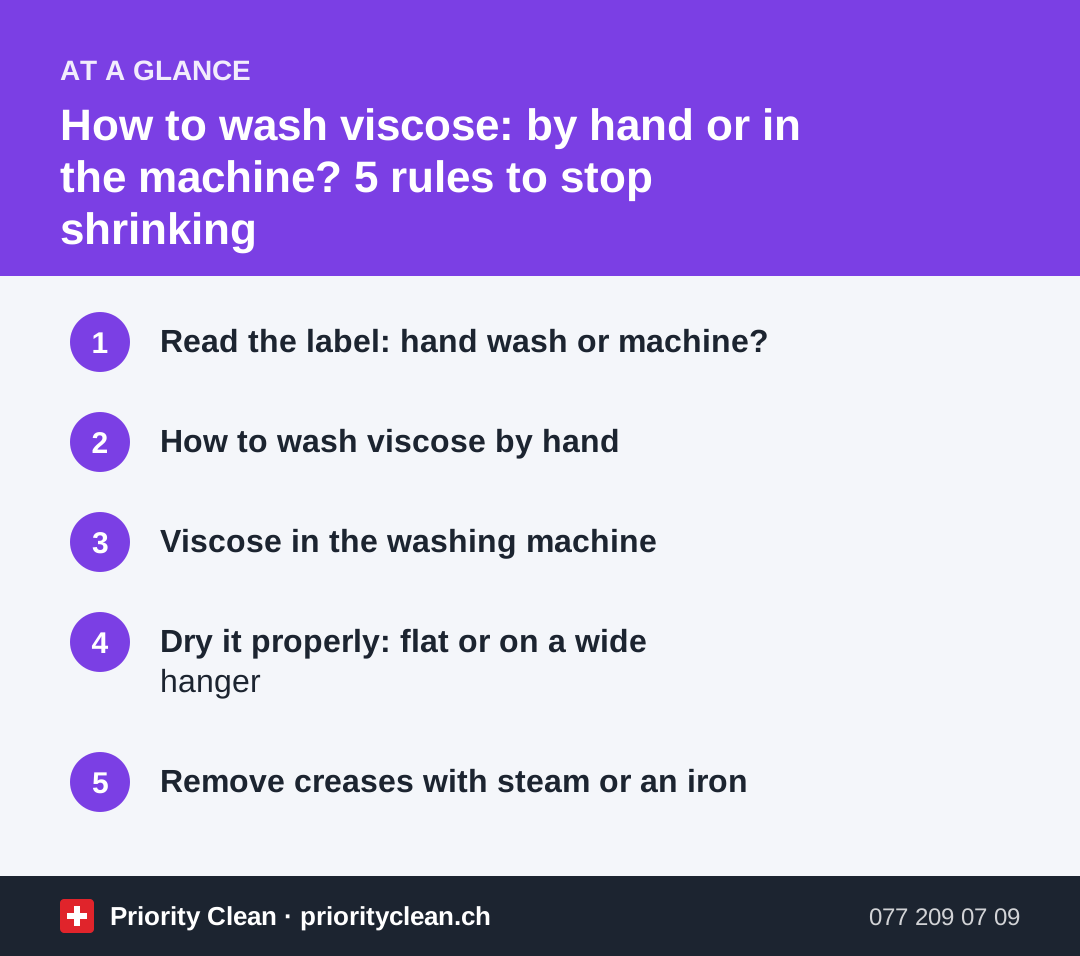
1. Read the label: hand wash or machine?
On viscose you'll often find one of these symbols: a hand in the wash tub, a tub with 30 and two bars or – for delicate pieces – a crossed-out tub. GINETEX, the international association behind the symbols, explains them on its consumer site: hand wash means a maximum of 40 °C, ideally 20 to 30 °C, without rubbing or wringing.
| Symbol on the label | What to do |
|---|---|
| Hand in the tub | By hand or with the machine's hand-wash programme |
| Tub with 30 and two bars | Very gentle programme, small load |
| Tub with 30 and one bar | Gentle programme at 30 °C |
| Crossed-out tub | Do not wash – dry clean |
Take care with pieces that have linings, sequins, embroidery or pleats. If the label says "dry clean only", take the item to a dry cleaner.
2. How to wash viscose by hand
Hand washing is the gentlest method and often the best choice for delicate pieces.
- Fill a clean basin or sink with cold to lukewarm water.
- Dissolve a small amount of delicates detergent in it before adding the garment.
- Submerge the item and move it gently through the water. Don't rub or brush.
- Leave it to soak for a few minutes, then press it gently.
- Rinse with clean water at the same temperature until no more foam appears.
- Press the water out carefully – never wring or twist.
3. Viscose in the washing machine
If the label allows machine washing, choose the hand-wash, delicates or wool programme. Cold to 30 °C is enough for lightly worn summer clothes. The Swiss energy programme EnergieSchweiz recommends low temperatures and eco programmes anyway – with viscose, this also protects the fibre.
- Use a mesh laundry bag: it protects against friction and stops straps or ties from tangling.
- Keep the load small: GINETEX advises you to reduce the load on gentle programmes. The pieces need room to float freely.
- Turn it inside out: the surface stays smoother and colours last longer.
- Delicates detergent without bleach: a heavy-duty detergent with bleach can fade colours. Fabric softener isn't needed.
- Low spin: choose the lowest spin speed or skip spinning altogether.
Take the viscose out as soon as the programme ends. In a shared laundry room it's worth setting an alarm, because deep creases form when it sits wet and squashed.
4. Dry it properly: flat or on a wide hanger
Wet viscose is heavy and stretches under its own weight. How you dry it depends on the fabric:
- Woven blouses and dresses: on a wide, padded hanger, smoothing seams and hems by hand.
- Viscose jersey and knits: flat on a drying rack or towel so nothing stretches out.
- No tumble dryer: heat and movement make viscose shrink.
- No direct heat: not on the radiator and not in blazing sun.
5. Remove creases with steam or an iron
Viscose creases easily. Often it's enough to hang the garment in the bathroom while you shower: the steam smooths out light creases. A handheld steamer works in a similar way.
When ironing, follow the dots in the iron symbol. Iron viscose while slightly damp, on the reverse and at a medium setting. On dark fabrics, place a thin cotton cloth in between to avoid shiny marks. Press the iron down rather than pushing it vigorously back and forth.
The most common mistakes
- Wringing: it twists the wet fibre, and the shape often stays distorted for good.
- Washing with jeans and towels: heavy, rough laundry rubs against the delicate surface.
- Washing too warm: just a few extra degrees can be enough to shrink viscose.
- Wet dresses on thin wire hangers: the shoulders bulge and the fabric stretches.
- Scrubbing stains: dab them carefully with a little delicates detergent, testing first on a hidden spot.
Frequently asked questions
Can you machine wash viscose?
Yes, if the label allows it. Choose a hand-wash, delicates or wool programme, cold to 30 °C, a small load, a mesh bag and the lowest spin speed. If the label shows a crossed-out tub, take the item to a dry cleaner.
Why does viscose shrink?
This cellulose fibre swells considerably in water and contracts again as it dries. Heat, friction and vigorous spinning make this worse. Cool water, little movement and air-drying reduce the risk considerably.
Can viscose go in the tumble dryer?
Better not. Most labels rule it out, and heat combined with constant movement is one of the main causes of shrunken viscose. Air-dry it flat or on a wide hanger.
How do I iron viscose without making it shiny?
Iron it slightly damp, on the reverse and at a medium setting, as the label indicates. On dark fabrics, a thin cotton cloth between iron and fabric helps. Often, steam alone is enough to smooth out creases.
Thanks for your feedback! Feel free to share the guide.
Thanks! What was missing? Drop us a line – we will improve the guide. WhatsApp