A forgotten plant saucer, a half-full watering can, the paddling pool from the weekend: in summer, water quickly ends up standing somewhere on a balcony or terrace. That is exactly where prevention against the tiger mosquito starts. The Asian tiger mosquito is an invasive species that the Swiss Confederation and the cantons monitor and control.
You can do a lot yourself, without any chemicals, simply by taking away the places where mosquitoes breed. These five measures show which spots to keep an eye on and what to do if you find a suspicious mosquito.
Why the tiger mosquito finds breeding sites on balconies and terraces
Mosquitoes lay their eggs where water collects, and the larvae develop in the water. That is why the FOEN focuses above all on breeding sites. In its information on mosquitoes and the Asian tiger mosquito, it recommends covering all containers in which water can stand from May to September, or emptying and cleaning them at least once a week.
A balcony or terrace has more of these than you might think. The FOEN list mainly names everyday objects: plant saucers, vases, gutters, rain barrels, pet bowls and paddling pools – lots of small pools of water around the house that nobody created on purpose.
| Possible breeding site | What you can do |
|---|---|
| Plant pot saucers | Tip out excess water after watering, clean weekly |
| Vases, watering cans, tubs, buckets | Empty and store upside down or covered |
| Rain barrel | Cover with a lid or a tight-fitting net |
| Paddling pool, water toys | Empty or cover after use |
| Pet bowls, bird baths | Change the water at least weekly, wash the bowl |
| Gutters, tarpaulins | Remove leaves, avoid hollows where water collects |
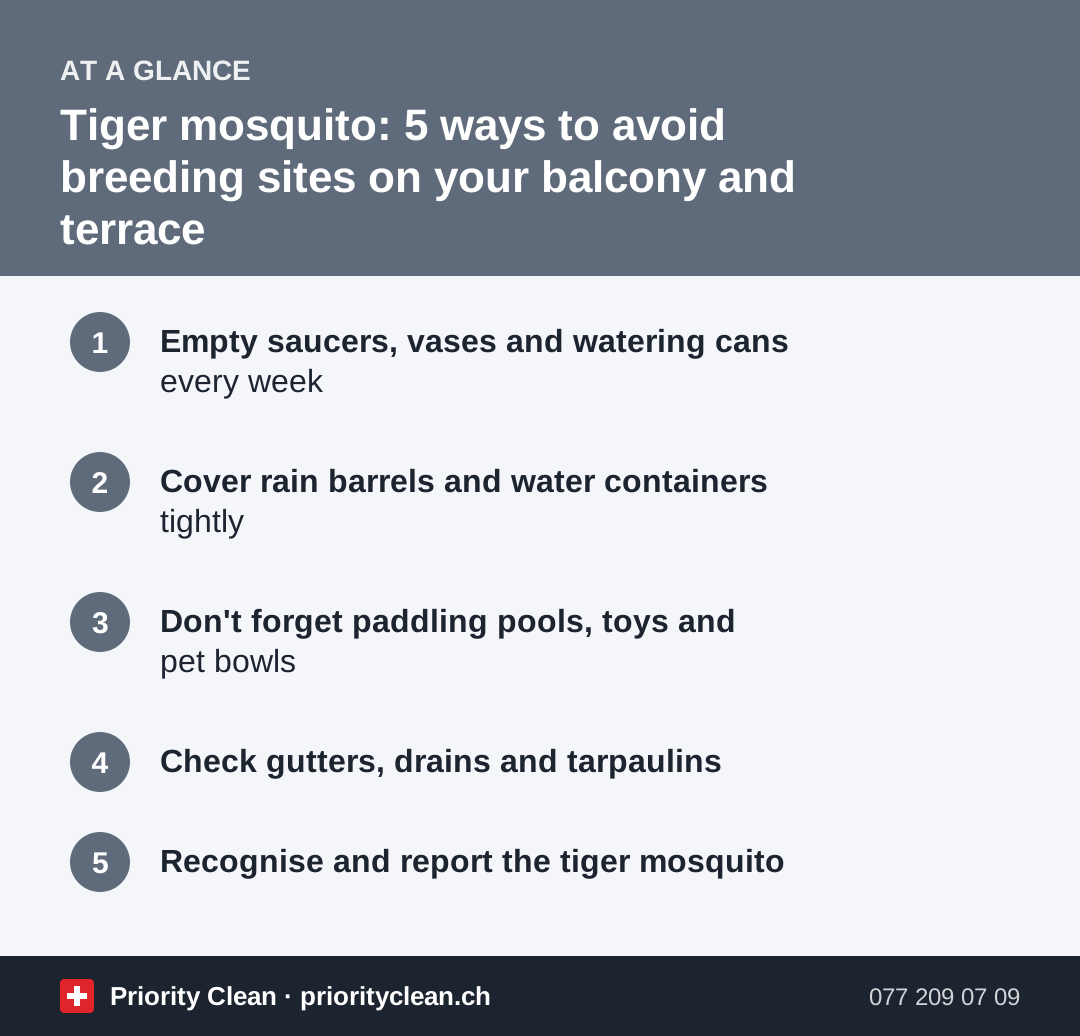
1. Empty saucers, vases and watering cans every week
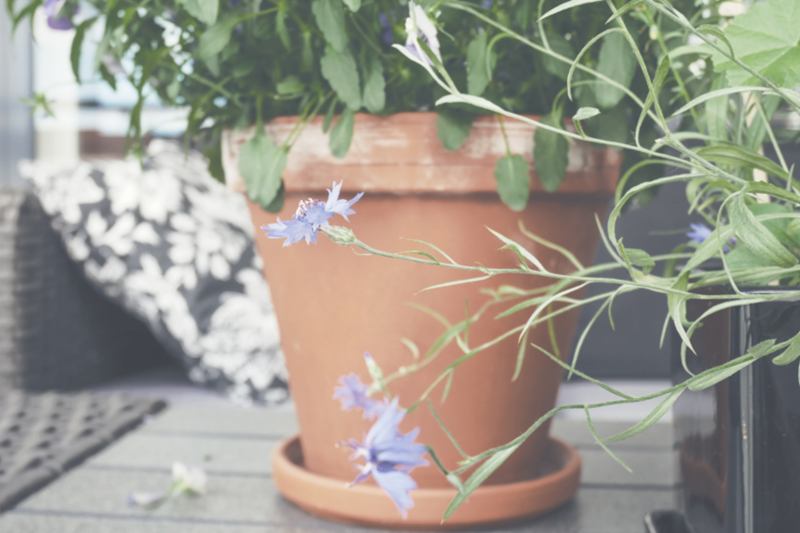
Plant saucers are the most common source of standing water on a balcony. Water your plants so that nothing stays in the saucer for long, and tip it out if water is left after watering. Once a week, scrub saucers, vases and tubs with a brush – according to the FOEN, emptying and cleaning go together. How to remove limescale and deposits from pots and saucers is explained in our guide How to clean plant pots.
Turn watering cans, buckets and empty pots upside down or store them under cover. Cut flowers on the balcony table also need their water changed regularly.
2. Cover rain barrels and water containers tightly
Rain barrels are popular on terraces and in allotments, but they hold a lot of still water. The FOEN names them explicitly among the containers that should be covered. A tight-fitting lid or a fine-mesh net stretched taut stops mosquitoes reaching the water. Check regularly that the lid or net is still tight and that no puddle forms on top.
3. Don't forget paddling pools, toys and pet bowls
A paddling pool left full outdoors for days is an ideal pool of standing water. Empty it after use or cover it. That helps twice over: for mobile plastic pools, the Swiss Council for Accident Prevention (BFU) recommends that you remove the ladder and cover or empty the pool when it is not in use, because a small child can drown in just a few centimetres of water.
Sandpit toys, moulds, little buckets and water pistols also collect rain. After playing, store them upside down in a box. Refill the dog or cat water bowl and the bird bath with fresh water regularly and wash them at least once a week.
4. Check gutters, drains and tarpaulins
Blocked gutters are also on the FOEN list: leaves hold back the water and it stands. On your own terrace, clear leaves from channels and drains as far as you can without climbing acrobatics on a ladder. High gutters and shared drains in a block of flats are a job for the caretaker and property management – report standing water to them.
Also watch out for tarpaulins over garden furniture, bike trailers or firewood: rainwater collects in the hollows. Pull the cover taut or tip the water off after every shower. It is a good moment for a thorough clean, too – see our guide How to clean a balcony.
5. Recognise and report the tiger mosquito
The FOEN asks people to send black-and-white striped mosquitoes to a regional reporting centre. These reports help the authorities monitor how the species spreads. The FOEN website or your canton will tell you which centre covers where you live and how to send in a specimen.
For your home, the FOEN recommends insect screens on the windows. To keep them effective, clean them regularly as described in our guide How to clean insect screens. According to the FOEN, plug-in insecticide vaporisers are not recommended for permanent use.
The most common mistakes
- Only watching the large bodies of water: most breeding sites are small – a saucer is enough.
- Emptying without cleaning: the FOEN recommends emptying and cleaning containers.
- Leaving the paddling pool full for days: a breeding site and an accident risk at the same time.
- Vaporiser running non-stop: not recommended by the FOEN; insect screens are the better choice.
- Ignoring standing water in shared areas: let the caretaker or property management know.
Other reasons for mosquitoes indoors are covered in our guide Mosquitoes in the flat.
Frequently asked questions
How do I recognise a tiger mosquito?
The FOEN describes it as a black-and-white striped mosquito. Whether it really is a tiger mosquito is checked by the regional reporting centres. Send suspicious specimens there instead of making your own diagnosis.
When do I need to watch out for breeding sites?
The FOEN recommends covering all containers in which water can collect from May to September, or emptying and cleaning them at least once a week.
Where do I report a tiger mosquito?
To a regional reporting centre. You can find the one responsible for where you live on the FOEN page about mosquitoes or through your canton.
Is the tiger mosquito dangerous?
It can transmit dengue, chikungunya and Zika viruses, which is why the Confederation and the cantons monitor and control it. If you have questions about your health, talk to a doctor.
Thanks for your feedback! Feel free to share the guide.
Thanks! What was missing? Drop us a line – we will improve the guide. WhatsApp