Spit-up milk, drool, sun cream and, on hot days, plenty of sweat: a baby carrier takes a lot, and your child often has the fabric right in front of their nose and mouth. When you wash a baby carrier, though, it's best not to simply stuff everything into the machine – buckles, padding and straps are load-bearing parts that need gentle treatment.
In summer the carrier needs washing more often. Here you'll find out what the care label tells you, how to prepare, wash and dry carrier and wrap properly – and what to check afterwards for your child's safety.
Why and how often to wash a baby carrier
A carrier is worn close to the body. Sweat from parent and child, milk and saliva soak into the fabric, and the head support and shoulder straps quickly get stained or smell sour. Babies also love chewing on the straps.
Even so, a carrier doesn't need to go in the machine after every walk: frequent washing wears out fabric and padding. What works well: spot-clean small stains immediately, change drool pads regularly and wash the whole carrier when it's visibly dirty or smells. A cotton wrap can be washed more easily and a little more often.
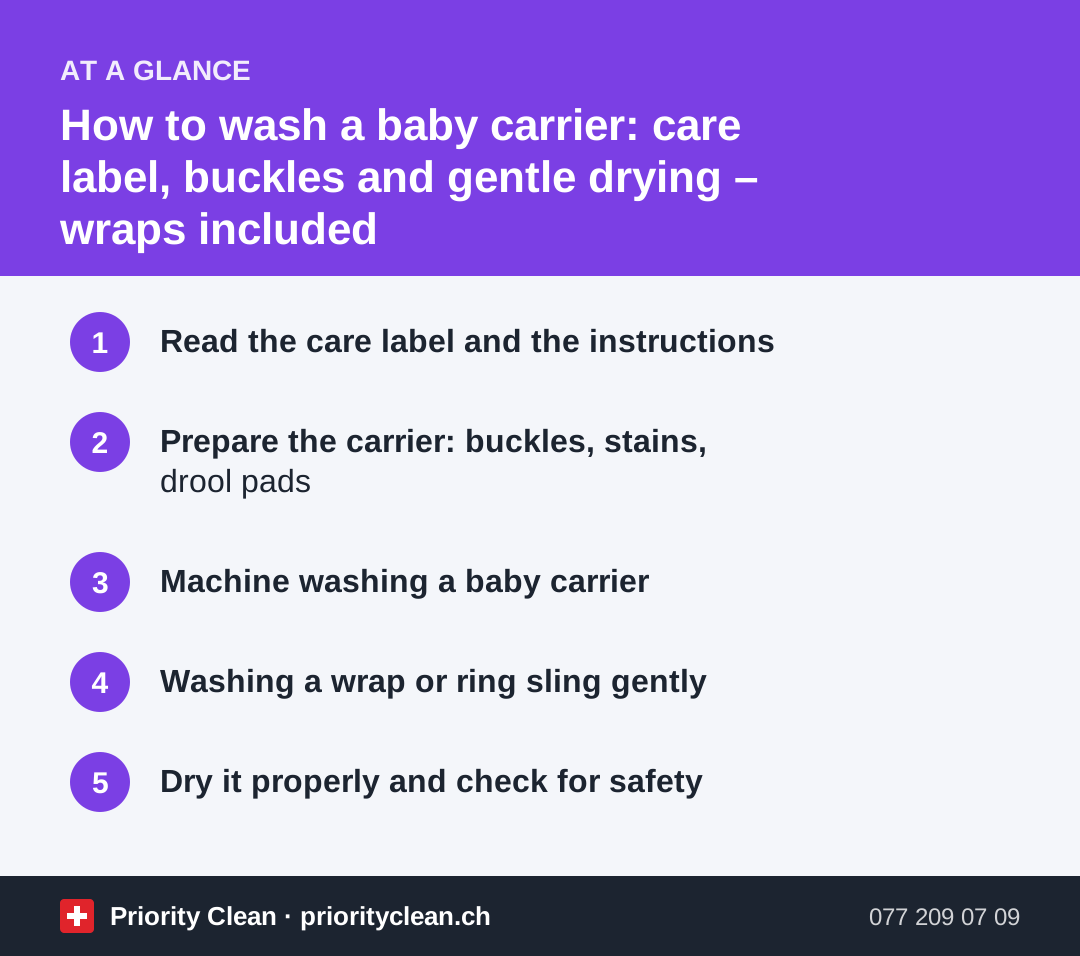
1. Read the care label and the instructions
Every carrier has its own label, and many manufacturers give detailed washing advice in the instructions. Care symbols are standardised internationally. On its consumer website, GINETEX explains that the number in the wash tub is the maximum temperature, that bars underneath mean a milder cycle with a smaller load, and that for hand washing the maximum is 40 °C and the fabric should not be rubbed or wrung.
| Symbol | What it means for the carrier |
|---|---|
| Wash tub with 30 and one bar | Gentle cycle, max. 30 °C, drum only partly full |
| Wash tub with 30 and two bars | Very gentle, e.g. wool or delicates programme |
| Wash tub with a hand | Hand wash only, don't rub or wring |
| Crossed-out wash tub | Do not wash – spot-clean or ask the manufacturer |
| Crossed-out tumble dryer | No tumble dryer |
If the label is missing or unreadable, ask the manufacturer or retailer. When in doubt, choose the gentlest option.
2. Prepare the carrier: buckles, stains, drool pads
- Remove detachable parts: drool pads, hood, newborn insert and pockets are washed separately.
- Fasten buckles, loosen straps: this stops the straps tangling, and the plastic buckles bang less against the drum.
- Use a laundry bag: a large mesh bag or an old pillowcase protects both carrier and machine.
- Pre-treat stains: rinse milk and saliva stains with cold water first, as hot water can set proteins. Then work in a little plain soap or mild liquid detergent – test on an inconspicuous spot first.
The Swiss consumer foundation Stiftung für Konsumentenschutz lists curd soap, washing soda and bicarbonate among the tried-and-tested household remedies that can replace many specialist products. For a carrier, a little soap on the stain is enough.
3. Machine washing a baby carrier
If the label allows machine washing, proceed like this:
- Programme: gentle or delicates cycle, usually at 30 °C, with a reduced spin speed.
- Load: the carrier on its own or with a few soft items, so it can move freely in the drum.
- Detergent: a mild detergent for delicates or colours, used sparingly. The Swiss energy programme EnergieSchweiz advises not increasing the detergent dose at low temperatures – that applies here too.
- No fabric softener: it leaves residue in the fabric that can irritate a baby's sensitive skin. Why we're generally cautious is explained in our guide on fabric softener.
An extra rinse helps remove detergent residue from thick padding.
4. Washing a wrap or ring sling gently
Baby wraps are often made of cotton, sometimes of linen, hemp, wool or silk. According to many manufacturers, cotton wraps can go in the machine on a gentle cycle, while wraps containing wool or silk need a wool programme or hand washing.
For hand washing, fill a basin with lukewarm water and a little wool detergent, move the wrap gently through it and rinse with clean water. Don't rub or wring it – instead, press the water out gently by rolling it in a bath towel.
With a ring sling, protect the metal rings with a sock or small cloth so they don't damage the drum or the fabric. Fabric softener is especially unsuitable for wraps: the weave can become more slippery, so knots and carries hold less well.
5. Dry it properly and check for safety
Let the carrier and wrap dry in the air – in the shade or in the laundry room, not on the radiator and not in blazing sun. The tumble dryer is off-limits unless the manufacturer explicitly allows it: heat can warp or shrink plastic buckles, foam padding and webbing. Thick padding often takes more than a day to dry right through. Only wear the carrier again once it's completely dry, or it will start to smell musty.
The most common mistakes
- Washing by guesswork: ignoring the label risks shrunken padding and warped buckles.
- Hot water on milk stains: the protein sets and the stain stays.
- Tumble dryer instead of drying rack: the heat damages buckles and padding.
- No check afterwards: a damaged strap is a safety risk.
Pushchairs and seat covers need a wash now and then too – tips are in our guide on how to clean a pushchair.
Frequently asked questions
At what temperature can you wash a baby carrier?
The care label tells you. Many carriers can take a gentle cycle at 30 °C, some are hand wash only. Follow the manufacturer's instructions and, if in doubt, choose the lower temperature.
Can a baby carrier go in the tumble dryer?
Usually not. Heat can warp or shrink buckles, padding and straps. Dry the carrier in the air, in the shade, until it is completely dry inside as well.
How often should you wash a baby wrap?
When it's visibly dirty or smells. Small stains are best spot-cleaned straight away. Frequent washing is fine for cotton; with wool and silk, be more sparing.
Can I use fabric softener on a baby carrier?
Better not. Softener leaves residue that can irritate sensitive skin, and a wrap can become more slippery, so knots hold less well.
Thanks for your feedback! Feel free to share the guide.
Thanks! What was missing? Drop us a line – we will improve the guide. WhatsApp